Good Nutrition For The Elderly
As we age, good nutrition becomes more important than ever and many older people face an increased risk of malnutrition. We look at the risks and offer some guidance.
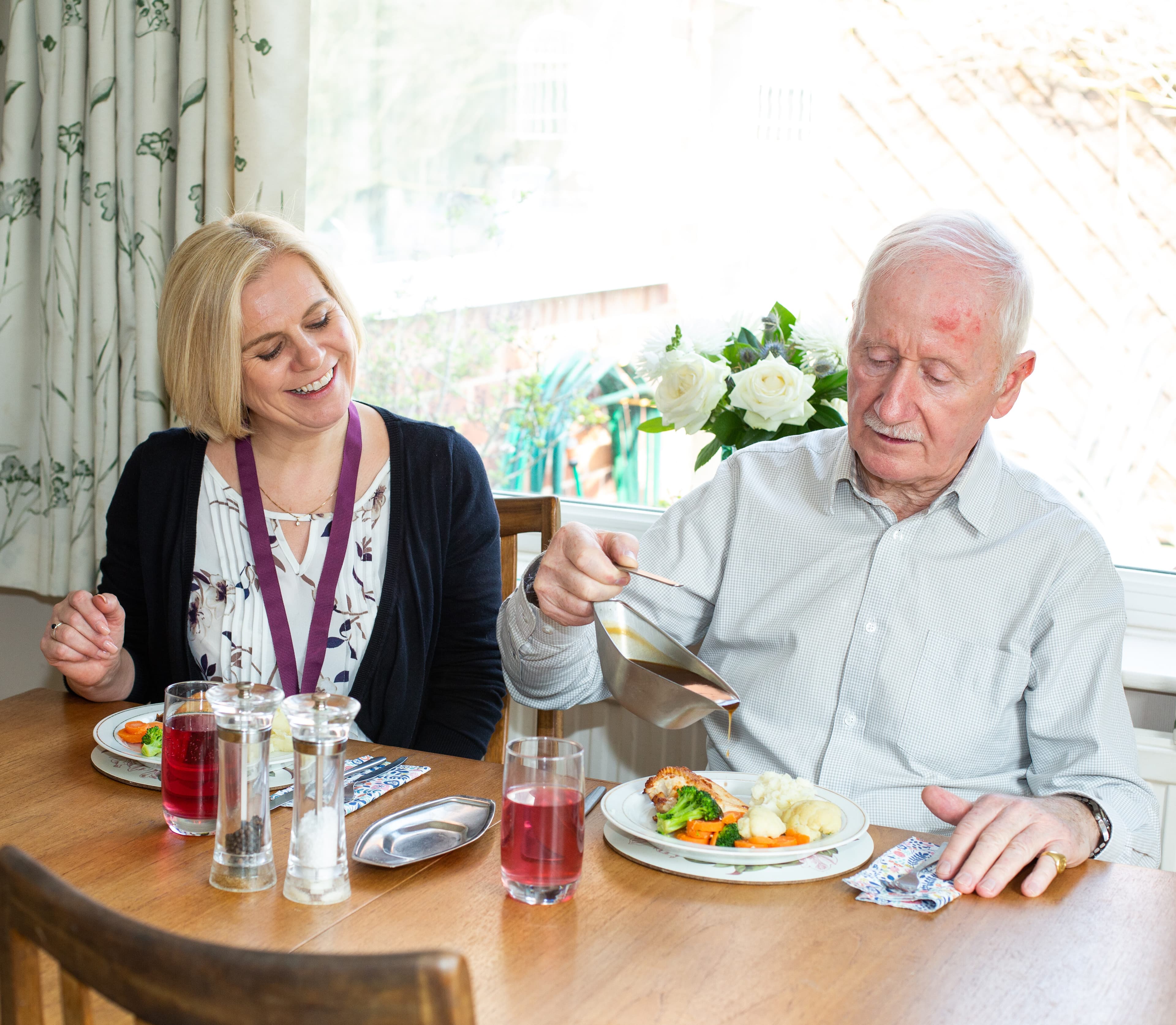
Home Instead Basingstoke provides home care in Basingstoke and the surrounding areas of north Hampshire. Our home care services can include various forms of nutritional support, together with companionship, help around the house, personal care and live-in care, to enable your loved one to continue living a happy and independent life in the home they love.
Why is nutrition so important for the elderly?
Older adults have a slower metabolism, so their need for calories is less, but at the same time their need for various nutrients increases – in particular:
- The need for protein is increased in order to address age-related muscle loss, and the resulting loss of mobility and risk of falls
- The need for vitamins and essential minerals is increased in order to address reduction in the body’s ability to absorb them from food, and various resulting risks including weakened immune response, loss of bone strength, diabetes, heart disease and cognitive decline
Good nutrition through a balanced diet rich in the right foods will help a person to remain healthy, retain their independence and maintain their quality of life.
Why are the elderly at risk of malnutrition?
Adjusting your diet sounds easy and fun, but for the elderly healthy eating can be impacted by:
- Reduced appetite, eg due to slowed metabolism, hormonal changes or medication
- Dental, chewing or swallowing problems, making eating difficult or uncomfortable
- Changes in taste and smell, reducing the appeal of food
- Cognitive decline, impacting the ability to prepare food or simply forgetting to eat
- Low mood, causing loss of interest in food
Home Instead research has found that 30% of over-85s are at risk of malnutrition.
Practical tips for healthy eating by the elderly
A few strategies to support our elderly loved one who might be experiencing some of these challenges:
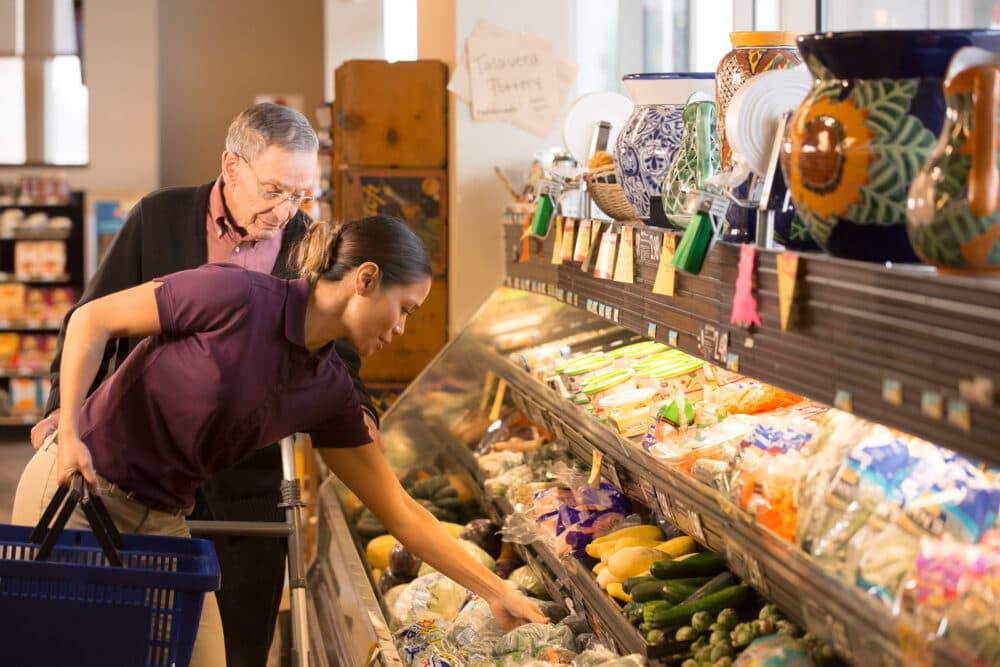
- Help your loved one with the planning of healthy meals, preparation of shopping lists and getting to the shops or ordering online
- Include vegetables and fruit at every meal, and choose whole-grain options for bread, rice and pasta
- Encourage a daily routine which includes regular meals and healthy snacks
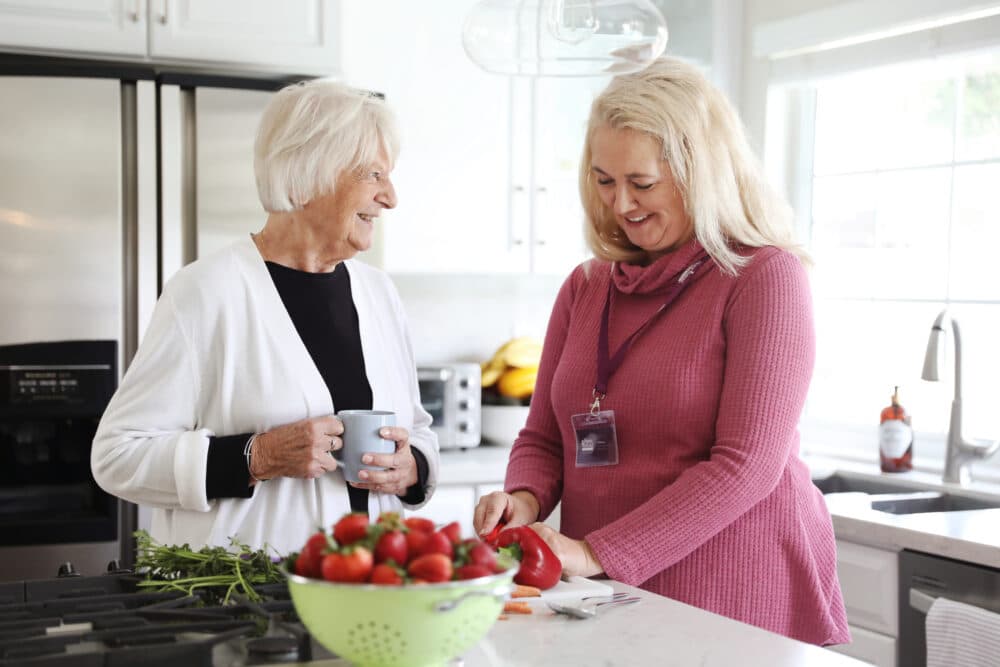
- Prepare meals in advance to reduce effort, and if necessary provide foods that are softer, so easier to eat
- Share meals with family or friends whenever possible, making eating more enjoyable whilst also supporting mental health.
What are good and bad foods for the elderly?
The guidance is the same as for the rest of us, but is of course more important for the elderly.
Good sources of foods rich in the most important nutrients include oily fish and seafood; lean meat and poultry; eggs and dairy products; beans and lentils; fruit and vegetables; yoghurt and kefir; tofu and soy products; and nuts and seeds.
As for the foods to avoid, or to eat in strict moderation, it’s the foods we are all wary of – those providing “empty calories” like chips, cakes, biscuits, refined white bread, confectionery, animal fats and most heavily processed ready-made foods.

The importance of hydration and fibre
Hydration is important and supports digestion, kidney function and overall energy levels, but it’s a common issue for the elderly. The sensation of thirst may decrease with age and there can be a real reluctance to drink adequate quantities.
We encourage drinking water regularly throughout the day, including drinks of milk, tea and fruit juices in the daily routine, and including water-rich foods such as soups, melons and oranges in the diet. Monitoring urine colour is a good indication of hydration levels.
Fibre is important for digestion, blood sugar and cholesterol control, and to help avoid constipation (a common concern for the elderly). It is obtained from foods like whole grains, fruit and vegetables, beans and legumes, and nuts and seeds.

Home Instead Basingstoke provides home care services in Basingstoke and the surrounding towns and villages of north Hampshire. Our nutritional support can range from taking clients shopping to planning meals to providing as much help in meal preparation as the client wants. Our approach is always to be there to support our client, respecting their wishes and preferences, and only providing as much intervention as the client needs – we are conscious not to de-skill our clients or compromise their self esteem.
FAQs
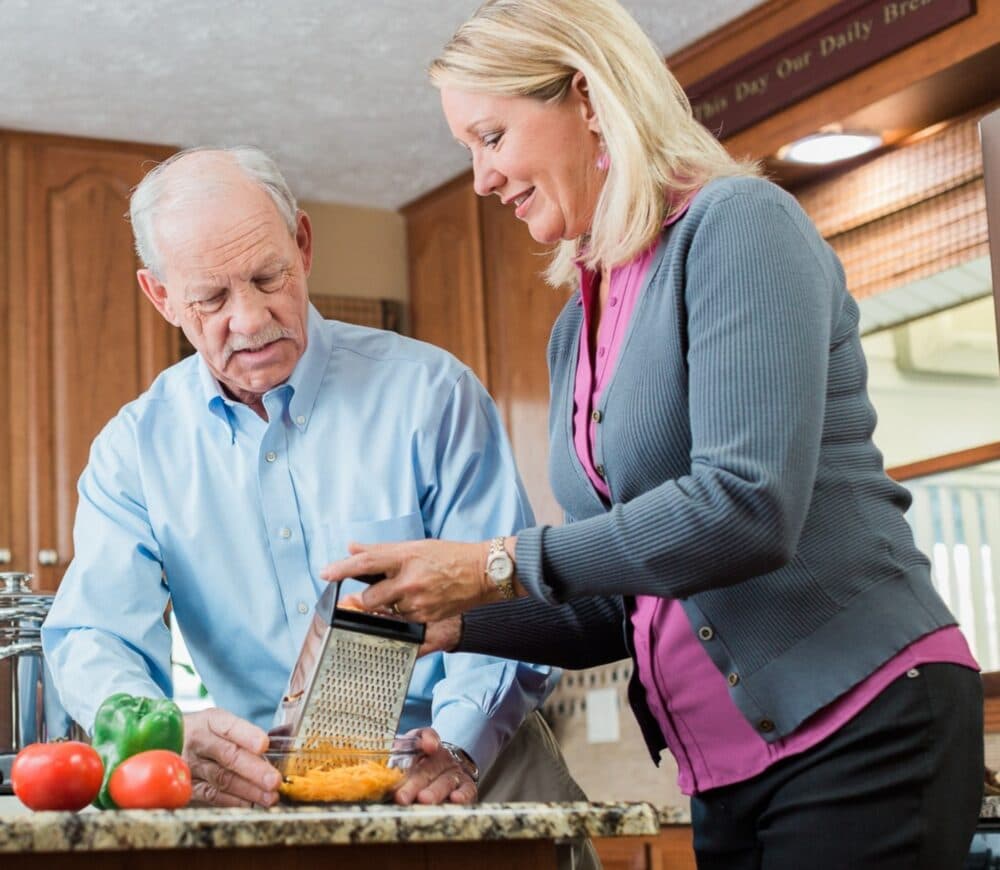
My elderly mother is no longer safe in the kitchen. Can you help? – Yes, this is a common concern. We would provide a carer to help her prepare meals, but the decisions would remain hers and we would work alongside her in the preparation of the meals, keeping her safe, involved and motivated.
My elderly father has lost interest in food and is losing weight. What should I do? – There are a number of possible causes for him losing interest in food and it might be useful if you could gently probe whether, for example, he is finding eating difficult, he has lost his appetite, his senses of taste and smell have changed, or it is the result of low mood. You could try different and more appealing dishes, keeping the food soft and easy to eat, and making meals more of a social occasion with friends or family which he will look forward to. If the situation continues then consult with his GP to explore underlying causes.
Can nutritional support be combined with other types of home care? – Yes, our care services are bespoke to the individual and will cover all the individual’s needs. This might mean, for example, providing breakfast after helping a client with their personal care, helping with lunch as part of a few hours of companionship in the middle of the day, or preparing all of a client’s meals whilst providing 24-hour live-in care.
My mother can’t read Best Before dates on food and keeps things that have gone off. Can you help? – Yes, this is a common concern and we can check the contents of a client’s fridge or larder for out-of-date food, and remove it when necessary, as part of any package of care.
My father likes to go out to eat several times a week but I don’t have the time to take him. Can you help? – Yes, we can take your father out to his favourite places to eat, possibly combining the meal with a gentle walk or a drive whilst providing companionship throughout, to give him a great outing every time.
Experience home care that’s personalised, compassionate and dedicated to enhancing your life.
To find out more about our home care services please give us a ring on 01256 840 660,
email us at basingstoke@homeinstead.co.uk,
visit: Home Care in Basingstoke
or click on the enquiry button above.