Dementia parents and staring

Why Do Dementia Patients Stare At You?
It is common for people with dementia to stare, either at others around them or in random directions, for long periods of time. This can be distressing for families, so here, we are looking at the reasons this usually happens, triggers that might cause this, how families can respond to staring, when medical advice may be needed, and how caregivers can help.
At Home Instead, our aim is to help people age positively and in place by bringing expert care to their home. For nearly 20 years, we have been providing the highest standard of care, and creating industry-leading training programmes for our Care Professionals that are accredited by nursing and medical professionals. Today, we are the world’s largest global domiciliary care network, supporting over 100,000 older adults with personalised, tailored care at home. So whatever questions you have about a loved one’s dementia, we can help.
Why do people with dementia tend to stare?
Staring is a common symptom of dementia, whether the person is staring at someone or at nothing in particular. This might look like they are glassy eyed, wide eyed, panicked, or uninterested, and it might occur for several reasons all related to common dementia symptoms and brain changes. For example:
Memory and cognitive changes
Memory loss can affect the person’s ability to recognise certain things or faces, so staring could be an attempt to figure out who they are speaking to. Also, slower cognitive processing can make it more difficult to understand and interpret signals from people and objects around them, so they might stare while they try to wrap their head around what they are being told or what they are seeing.
Communication issues and social perception
Communication can be difficult when a person with dementia is unable to speak, so staring could be their way of expressing anxiety or a need for attention. Communication issues can also cause them to misunderstand social cues, and so a person with dementia may not understand that staring could be considered rude or bothersome to others. They may continue to do it because they don’t realise it is making people around them uncomfortable.
A 2017 study from the University of Aberdeen suggested that people with Alzheimer’s disease may also struggle with some aspects of social perception, like understanding eye gaze direction or following someone else’s gaze.
Anxiety due to misperceptions or confusion
Feelings of distress might lead to the person staring as a sign of distress, fear, anxiety, or as a coping mechanism when seeking reassurance or comfort. Misperceptions of things around them can cause people with dementia to stare if they feel threatened or like something is wrong, for example, if the brain interprets a shadow as a scary figure, or if they are unable to gauge the distance of an object.
General confusion, disorientation, and fluctuations in alertness are all common in dementia, and this can cause the person to stare to figure out what is really happening. They may stare if they become overstimulated or fixated on a certain object in the room.
Visual impairments
Visual impairments that are common in certain types of dementia, such as Lewy body dementia, can affect everything from depth perception to definition, so many people with dementia who also struggle with visual issues might stare to try and figure out what they are looking at.
Accompanying eye conditions like Posterior Cortical Atrophy (PCA) could also play a part, which is a neurodegenerative condition thought to affect less than 5% of people with Alzheimer’s disease. It is considered a visual variant of Alzheimer’s, impacting the posterior area of the brain which helps with visual processing and causes the person to struggle interpreting information from the eyes. This could result in staring.
You can learn more about testing for visual impairments in our article: How Often Should the Elderly Get an Eye Test?
Hallucinations or delusions
When misperceptions and misidentifications are more extreme, these can become hallucinations, which can cause people with dementia to see and interact with things that aren’t really there, leading to staring. According to Alzheimer’s Research UK, Lewy body dementia is likely to cause visual hallucinations which could increase stress. These may cause the person to misread what they are looking at, have to do a double take to confirm what they are seeing, or stare to try and better understand what is in front of them. A 2017 study of 352 people with dementia found that 25% of participants experienced delirium.
Staring does tend to occur in the later stages of dementia when symptoms like hallucinations are much more common, but it can also be viewed as an early sign of dementia, so it’s something families and caregivers should be aware of at all stages of the condition.
What behavioural triggers might lead to staring?
Changes in the environment or the person’s physical and emotional state can also result in staring. For example, noisy or busy environments, and cluttered environments, can be difficult for the person to focus in, so they may stare at one thing to manage the sensory overload. Sleep issues and fatigue might also lead to a reduced ability to process information, which means the person may stare in an attempt to do so.
Changes in the person’s routine or surroundings can be distressing for them, and might also trigger staring at new faces they don’t recognise, furniture that has moved in their home, or the surroundings in an unfamiliar place.
Pain or physical discomfort (such as hunger, thirst or needing to use the bathroom) could cause an attempt to communicate, and if they struggle to do this verbally, this may result in staring. Understanding the visual cues your loved one shows to convey their needs will come in handy, so if you think they are staring to try to tell you something, try to find out what this might be.
How can families and caregivers respond to staring?
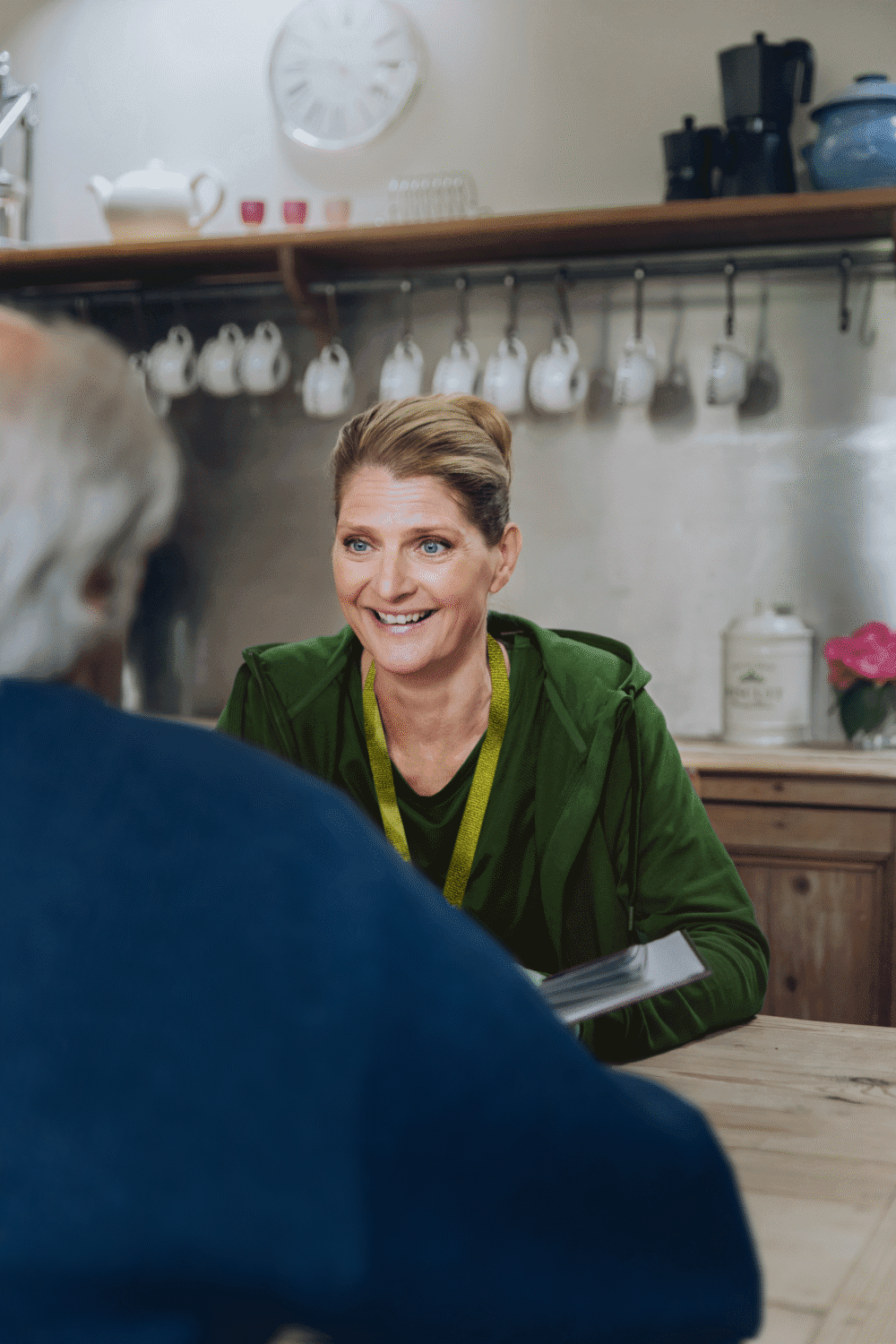
Staring or prolonged eye contact–from anyone, dementia or otherwise–could make anyone feel uncomfortable and potentially become defensive or paranoid. It is important to understand that this symptom typically comes from an innocent place and the person doesn’t necessarily realise what they are doing. Families and caregivers should try to:
- Keep calm and be patient with them while trying to decode why they are staring
- Speak to them softly about what might be causing them to stare, and ask them questions that could identify the source of their worry – remember, a person with dementia who is misperceiving things around them could be scared or uncomfortable, so reassure them that they are safe and that you are there to help
- Find different forms of communication that could make clear what they are trying to tell you, if anything
- Put them at ease with a reassuring smile or gentle touch of the arm – something to make them feel safe and supported if they are worried or scared
- Explain anything you think might be causing confusion, if this is the cause of staring
- Gently redirect their attention to an enjoyable, familiar task or comforting object, if possible
Make any changes to the environment that might help them to feel more comfortable, such as improving lighting to reduce shadows, or removing objects they may be staring at in fear – try to make improvements without moving furniture or belongings unnecessarily, as this can cause further distress for some people with dementia
Do I need to seek medical advice to address a loved one’s staring?
In a person with dementia, staring is common and usually nothing to worry about, so it does not require medical intervention. However, if you notice a sudden or noticeable increase in staring in your loved one, medical attention may help to find out what the problem is and address it as quickly as possible so they are more comfortable.
If a sudden increase in staring occurs over hours or days, or they have accompanying behavioural changes, this could be a sign of an infection, a medication side effect, or something like delirium which should be taken seriously. It is important these signs are checked out by a medical professional as soon as possible. You can learn more about delirium in our article: Delirium vs Dementia In Older Adults
Since staring can be a person’s way of communicating when they have dementia and cannot use verbal signals, a medical assessment could help to uncover any issues they may be struggling with that they cannot tell you about, such as pain, changes in appetite, or sleep issues.
If staring reaches a point where the person becomes unresponsive, distracted during important tasks, or appears panicked, professional guidance may help you get to the root of the problem.
What resources are available for families caring for an older adult with dementia?
If you are concerned by a loved one’s staring due to dementia, there are many organisations and charities within the UK with advice and resources to help you better understand this behaviour and take action to seek further help if needed. For example:
- The NHS has information on what to do if you are worried about someone with dementia, and how to cope with behavioural changes
- Age UK has information on caring for someone with dementia, and resources for caregivers
- Dementia UK has helpful information on symptoms specific to different types of dementia, such as staring in frontotemporal dementia
- The Alzheimer’s Society has guides on hallucinations and other potential behaviour changes in later dementia
- Your local council can offer a Care Needs Assessment to identify your loved one’s needs and connect them with a caregiver who can help with daily support
Professional home care services can step in to help manage communication with people with dementia, address symptoms like staring, and assist families in caring for the person in their own home
How can home care support someone with dementia?
Our Care Professionals are skilled and highly trained in supporting families caring for a loved one with dementia at home. To help manage the person’s day-to-day life and care needs, they can:
- Observe patterns of staring and keep a note of any possible triggers or other symptoms
- Provide companionship and engagement that can help to reduce any anxiety they have, and as a result, reduce staring
- Support families by providing tried-and-true strategies to help manage any challenging behaviours, such as staring, aggression, or sundowning
- Coordinate with healthcare workers to manage any behaviour escalations or accompanying symptoms
- Report any concerns to the family or the person’s GP so they can investigate further if they see fit
- Assist with other care needs, such as medication management, mobility support, or housekeeping if needed
- Provide specialist dementia care that draws on previous relevant experience to get to the root cause of staring, and take action to improve the person’s wellbeing
At Home Instead, our Care Professionals can provide person-centred dementia care using a programme that is City & Guilds Assured, and are trained to create a care routine that focuses on their needs and recognises when their behaviours start to change. We always take the time to match clients with a caregiver who will complement their personality and interests, and who has experience with the specific type of dementia or symptoms being displayed.
We’re an award-winning home care provider and part of a worldwide organisation devoted to providing the highest-quality relationship-led care for older people in their own homes. Arranging care for yourself or your loved one shouldn’t be stressful, so whatever questions you would like answered, feel free to reach out to the Home Instead team to discuss your needs.

Tim Howell , Learning and Development Partner
For the past 16 years, I have been dedicated to the care sector, progressing from Care Professional to Care Manager, and later assuming roles such as Specialist Training Manager. Currently, as a Learning and Development Partner at Home Instead’s National Office, I develop and review training programs, collaborate with external organizations like the Alzheimer’s Society, and manage various impactful projects.
My passion for dementia care has guided much of my work, from engaging with advanced dementia support initiatives, such as those offered by the End of Life Partnership, to staying informed through events like the annual Dementia Summit. These efforts reflect my deep commitment to enhancing the care and quality of life for individuals living with dementia