Home Instead’s New Ageing Index: How UK Attitudes Toward Later Life Are Changing

A Year of Change: How Attitudes Toward Ageing Are Evolving
When we launched the first New Ageing Index report in 2024 (see here), it marked a turning point in how we understand later life in the UK. For the first time, the home care sector had a research-led platform giving the public a voice on ageing, independence, and the realities of social care. Fast forward a year and three more quarterly reports later, the picture is clearer—and more urgent—than ever.
See links below to the individual ageing indexes:
Older adults are rewriting the narrative of later life. The Index shows that stereotypes of ageing as passive or disconnected are fading fast:
- 72% of people aged 65+ believe diet and exercise will slow ageing.
- 40% of UK adults and 43% of family carers believe old age will be the most enjoyable part of one’s life.
- Family carers and older people are eager to embrace new tools: 84% of family carers believe that AI has the potential to reduce loneliness.
This is a generation embracing connection, fitness, and digital tools to live life on their terms.
The Carer Crisis: A Growing Burden
Behind these positive shifts lies a sobering reality: family carers are under immense strain:
- Many wish they had more support but believe that state provision is inadequate. 50% of individuals would consider private care provision.
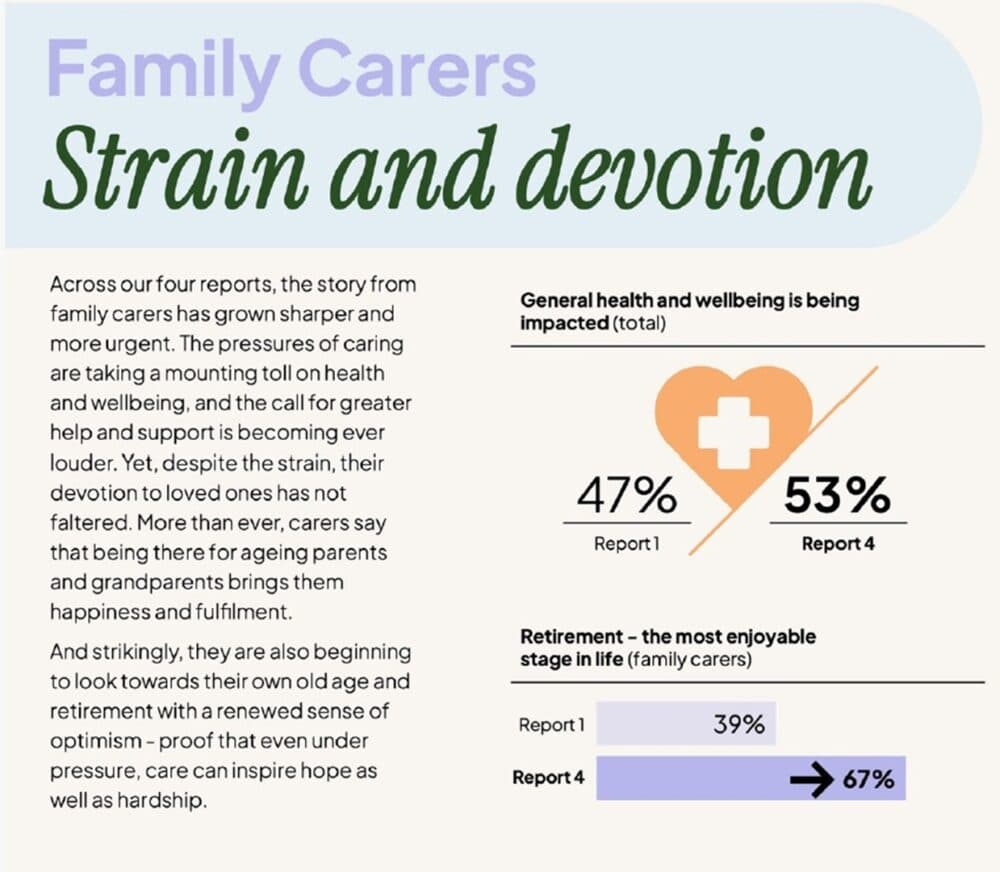
- Over half say caring harms their health, and nearly a third report mental health impacts.
- 44% of individuals fear going into a care home more than the death of a partner. 90% of 66+yo prefer to be trated at home wherever possible.
- Alarmingly, 53% say their health and wellbeing is being affected (47% in report 1).
This isn’t just a statistic—it’s a call for urgent action to support those who give so much. Despite the challenges, an inspiring 76% of family carers now say looking after loved ones brings them happiness and purpose, a huge jump from 55%!
Health Priorities Are Shifting
One of the most striking findings in the latest report is a change in what people fear most:
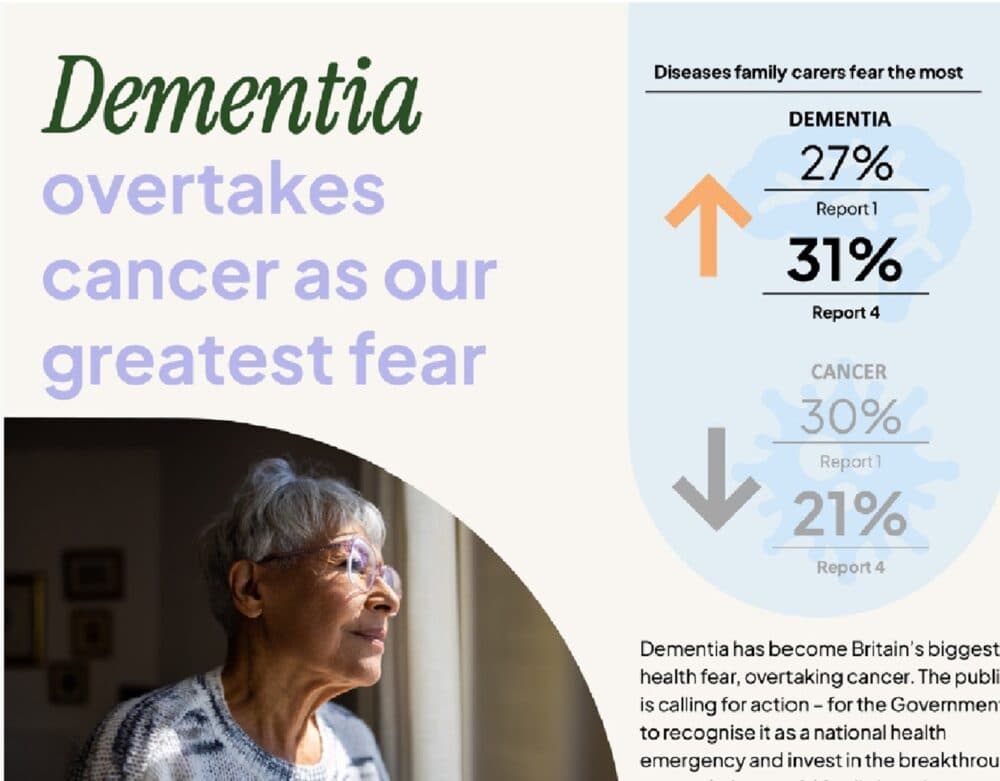
Family carers now fear dementia more than cancer. 68% of family carers belive that a care home should be the last resort.
This shift underscores the urgent need for awareness, funding, and better support structures—right here in our communities. Dementia isn’t just a medical challenge; it’s a societal one, affecting families, carers, and the fabric of local life.
Trust in Government Is Declining
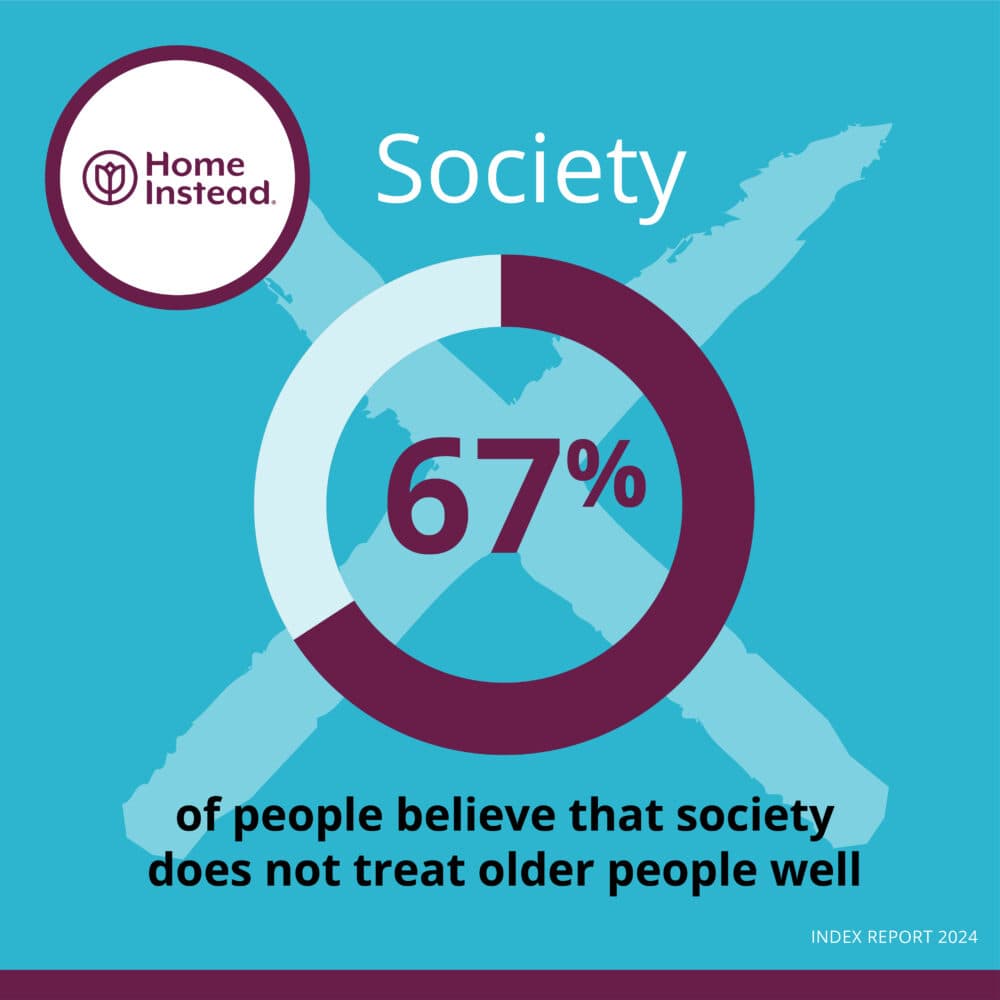
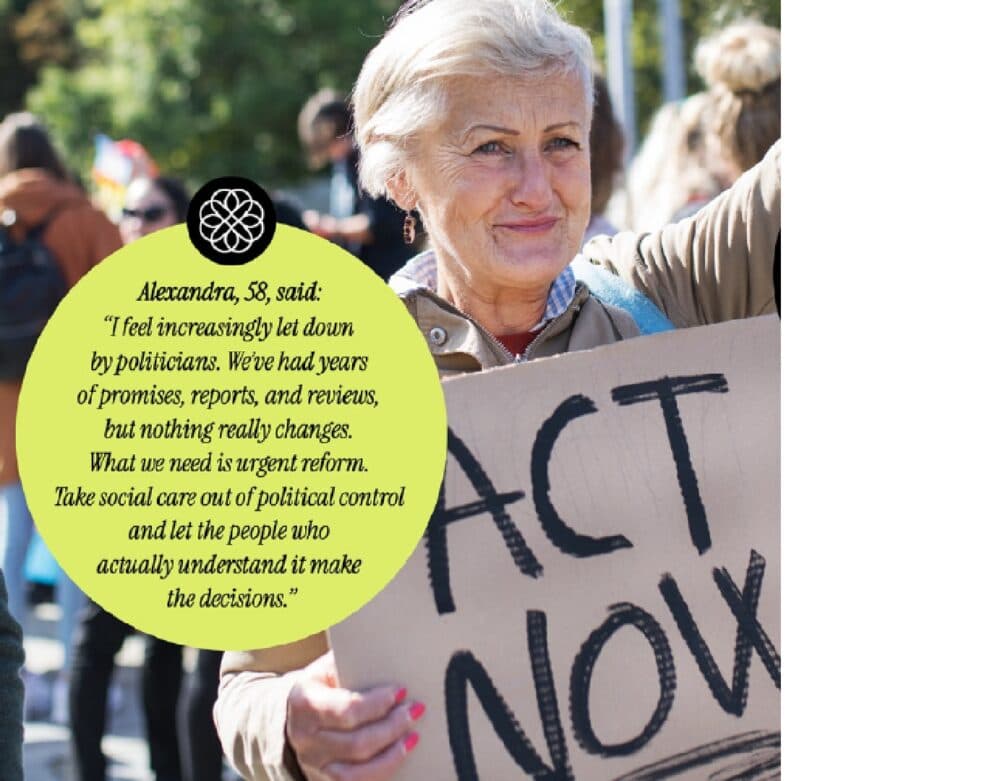
Confidence in social care reform has collapsed. 50% of respondents believe the Government’s Commission into social care will achieve nothing. This erosion of trust has real implications for policy and for the millions who rely on care services. Across all four reports frustration with the limits of state provision has grown.
What Does This Mean for Us?
What Does This Mean for Us?
The New Ageing Index isn’t just data—it’s a mirror held up to our communities. It tells us that:
- People want independence and connection.
- Carers need urgent support.
- Dementia is becoming the defining health concern of later life.
- Trust in government is fragile.
- Ageism still casts a long shadow.
As a community, we have a choice: to listen, to act, and to create a future where ageing is celebrated, supported, and understood.
At Home Instead we provide homecare support for clients at home across North Oxfordshire and South West Northamptonshire aiming not just to perform a task, but to improve the quality of life in the way many respondents in these surveys are seeking.