Signs an elderly person is too old to drive
Helpful advice for older adults and their families struggling with the decision of whether or not to continue driving as they age, and the signs it may be time to stop.
At what age is an older person legally obligated to stop driving in the UK?
Older people may wish to stop driving due to factors like slower reflexes, poor eyesight, or confusion, however, there is no particular age when you are legally obligated to do this. The AA finds the average age most UK drivers give up driving is 75, but data from 2023 suggests almost 140,000 Brits over age 90 still had a licence, so it depends on your individual ability.
Restrictions apply to those over 70 who must renew their driving licence every 3 years. Although you will not be required to get a medical exam for this, you must notify the DVLA of any health conditions or disabilities you have, and meet the driving eyesight requirements. You can learn more about these requirements in our guide to driving after 70.
What are the signs that an older person should stop driving?
It can be difficult to know the right time to stop driving, but you may need to consider this if you notice things like slower reaction times, difficulty staying within lanes, confusion, vision problems, frequent near misses, increased anxiety or frustration, and other signs. It may help to reduce your driving gradually. For example, start by stopping night driving, or only do local journeys.
If you are concerned about an older loved one’s driving abilities, look out for signs such as:
- Damage to their car or driveway, such as small scrapes
- Avoiding discussing driving or having others in their car
- Appearing surprised by events on the road, like not noticing cars pulling out
- Missing speed changes
- Getting lost on familiar roads, or relying on GPS
What are the alternatives for those who can no longer drive?
Stopping driving can feel like a restriction on your freedom, but there are many alternative options that will make travelling safer and less stressful for you, including buses, trains, taxis, community transport services, or caregiver transport.
You can map out your regular journeys using public transport instead, such as to the local shop or GP’s office, without having to worry about things like car insurance and parking. You can learn more in our guide to free bus passes and travel for the elderly.
If you are worried about an older relative driving, have a compassionate-yet-direct discussion with them to explain why you think they should look into other options. If you have serious concerns, you can also write to the DVLA in confidence.
How can home care support older adults who cannot drive?
Home care services can also be helpful for older adults who may need more support getting out and about, especially if they struggle with their mobility, health conditions, or mental health issues. Home care services can:
- Help them arrange a driving assessment to determine whether or not they should continue driving
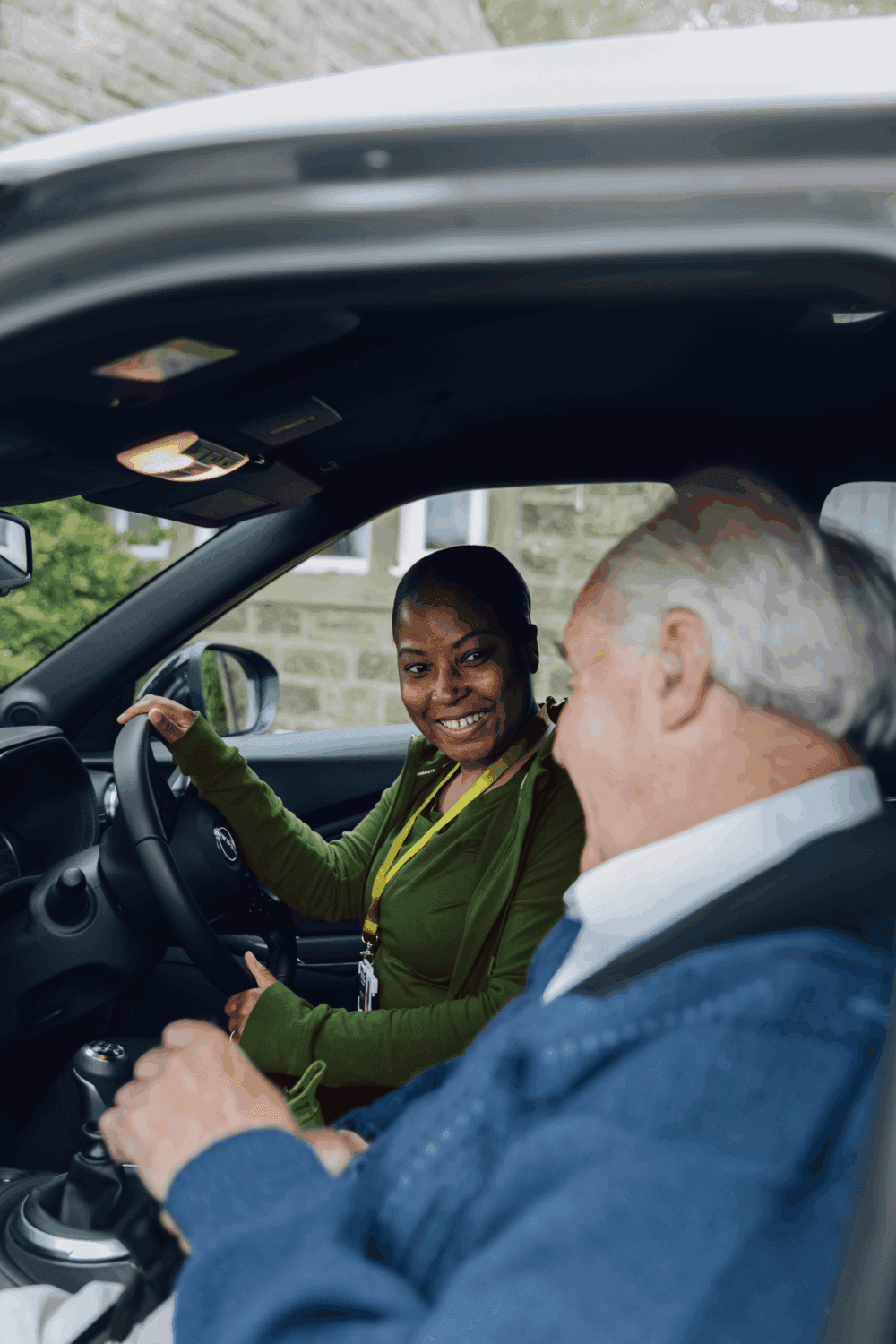
- Go with them in the car to offer extra support if they are anxious about driving
- Provide transport to local activities and appointments to ensure they don’t miss out on socialising and their usual routines
- Help them plan out journeys in advance using public transport, and be on call as a backup option if they need any help while out
- Accompany them on public transport to help them understand which services to use and their timetables

Why Home Instead?
At Home Instead, we understand the difficulties that stopping driving can bring, both practically and emotionally. For those who have driven for many years, it can be a challenge to suddenly navigate public transport or rely on others.
We are proudly rated 9.6 on Homecare.co.uk, with many of our locations rated “outstanding” by the Care Quality Commission (CQC), and our dedicated Care Professionals can be the support you need, whether that is encouragement if you are safe to drive but worry about doing so, or help when you stop driving entirely, such as providing transport to and from your usual activities, arranging taxis to ensure important appointments are never missed, and helping with general mobility to support you outside the home.

Diane Williams , Head of Quality & Standards
Before joining Home Instead, I built a comprehensive career in the social care sector, beginning in 1991 as a frontline care worker and advancing to senior leadership roles across both private and voluntary sector businesses.
Throughout my career, I have supported diverse care groups in a variety of settings, including community, residential, nursing, and secure environments. My experience spans working with older adults, including those living with dementia; individuals with physical disabilities and complex, long-term health needs; people with learning disabilities, including autism; individuals with enduring mental health challenges; individuals with current or past substance use and those with forensic backgrounds.
In 2002, I qualified as a social worker and have since maintained my professional registration with Social Work England.