How to Share Caring Responsibilities Without Feeling Overwhelmed

When a parent or relative needs extra help, families often pull together naturally. One person starts doing the shopping, another handles appointments, and someone else checks in after work. Over time, though, caring tasks can grow, and what felt manageable at first can start to feel heavy, especially if responsibilities are not shared clearly.
If you are supporting a loved one and it may help to know that feeling overwhelmed is common. It does not mean you are doing anything wrong. It usually means the caring role needs more structure, clearer boundaries, and the right support around the family.
Private care at home can also play a calm, practical role, helping families share responsibilities in a way that feels steadier for everyone.

Why Caring Can Start To Feel Overwhelming
Caring responsibilities often build slowly. Families adapt, and routines change bit by bit. Before long, you may be managing phone calls, prescriptions, meals, laundry, and worries in the background of everyday life.
Overwhelm often comes from a combination of factors:
- Tasks are spread unevenly, without anyone meaning for that to happen.
- Several people are helping, but no one is coordinating.
- Important information sits with one person, creating pressure.
- Caring is happening alongside work, parenting, and other commitments.
- The person receiving care needs more day-to-day support than before.
The kindest approach is to pause and reset the plan before exhaustion becomes the norm.

Start by Agreeing What “Care” Includes
One reason caring feels difficult to share is that different people define it differently. For one person, caring might mean personal care and meals. For another, it is emotional support, paperwork, and organising appointments.
A helpful first step is to list what support your loved one needs in a normal week. Keep it simple and practical, for example:
- Shopping and meal preparation
- Medication prompts and prescription collection
- Laundry, cleaning, and changing bedding
- Transport to appointments
- Companionship and social contact
- Help with personal care and dressing
- Checking the home is comfortable and safe
Once everyone can see the full picture, it is easier to share it fairly.

Have a Calm, Honest Conversation with Family
Families often avoid direct conversations because they do not want to upset each other. Yet a calm discussion can reduce tension and prevent misunderstandings.
Try to:
- Choose a time when no one is rushing.
- Focus on what is needed, rather than what people are not doing.
- Use practical language, such as “what can you do each week?”
- Be clear about what you can manage and what you cannot.
- Agree on how you will communicate, such as a weekly check-in message.
If someone lives further away, they may still be able to help with calls, admin, ordering essentials online, or arranging appointments. Small contributions can reduce pressure.

Share the Load in a Realistic Way
Not everyone has the same time, energy, or skills. The aim is not perfect equality. It is a plan that is sustainable.
Match tasks to people
Some people are good at organising. Others are better with practical tasks. Consider assigning roles such as:
- The appointment organiser
- The prescription and medication contact
- The main visitor for companionship
- The person who handles household tasks
- The family member who keeps track of updates
When roles are clear, fewer things get missed, and fewer people feel they have to hold everything in their heads.
Use a simple routine
A weekly rhythm often helps. For example, one person does shopping on Monday, another visits midweek, and someone checks in at the weekend. A routine reduces last-minute requests and helps your loved one feel more settled too.
Keep communication simple
A shared message thread can work well for quick updates, especially if several people are involved. Stick to the essentials: what has been done, what is coming up, and anything that needs attention.

Know When Family Help Needs Professional Support
Family care can be loving and meaningful, but it also has limits. It may be time to consider private care at home when:
- Tasks are increasing, and no one can reliably cover them.
- One person is doing most of the caring and feeling stretched.
- You are worried about leaving your loved one alone.
- Personal care needs feel difficult for the family to provide.
- Home routines are slipping, such as meals, hygiene, and housekeeping.
- The caring role is affecting work, sleep, or wellbeing.
Introducing professional support does not replace family involvement. It supports it, and can help families stay connected without becoming exhausted.
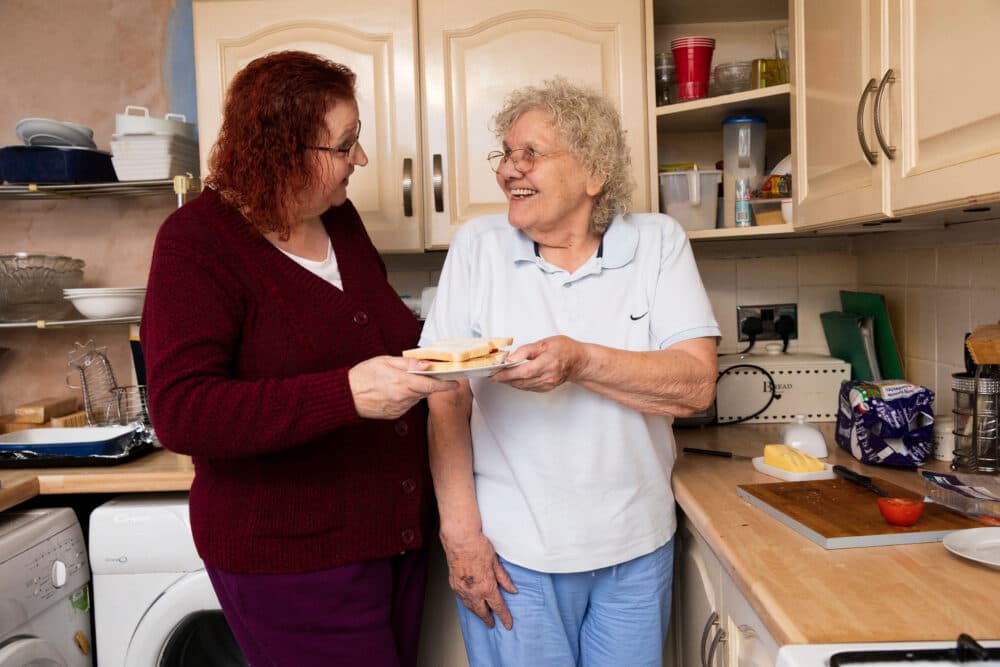
How Private Care at Home Can Help Families Share Responsibility
Care at home can take pressure off in practical ways, while keeping your loved one’s routine and preferences at the centre.
Consistent help with everyday tasks
A Care Professional can support personal care, meal preparation, medication prompts, and light household routines. This can reduce the number of tasks the family need to cover week after week.
Reliable visits at key times
Families often struggle most with mornings and evenings. Care visits at these times can make the day feel calmer and reduce worry.
Companionship and reassurance
A regular companion can support mood and confidence, especially for older adults who spend a lot of time at home. It can also reassure family members who cannot visit as often as they would like.
A more sustainable role for the family
When professional care covers core routines, family visits can feel more like time together again. Many families find this improves relationships and reduces tension.

Keep the older adult involved in decisions
Sharing responsibilities works best when the person receiving care feels respected and involved. Even when someone needs support, choices still matter. You might ask:
- “What would make the week easier for you?”
- “When would you like visits?”
- “Which tasks do you want to keep doing yourself?”
When care is built around preferences, it is more likely to feel natural and acceptable.

Your Local Home Instead Team
If you are supporting a loved one and caring responsibilities are starting to feel overwhelming, your local Home Instead team can help you explore private care at home in a calm, practical way. They can talk through what support could look like, how it can fit around family involvement, and how to create a steadier routine at home.
Our Free Care Conversations guide helps you navigate the care conversation with your loved ones and explain how we can help you throughout the journey.
Home Instead office name:
Home Instead Yeovil, Sherborne & Bridport
Office phone number:
01935 577030
Office website URL:
https://www.homeinstead.co.uk/yeovil-bridport/
Google Business Profile link:
https://maps.app.goo.gl/kpXgfruNGRPM9kj28
Areas covered (towns/villages/communities):
Stoke St Gregory, Bradford Abbas, Yetminster, Curry Rivel, Bridport, Castle Cary, Sherborne, Ilminster, Crewkerne, Somerton
Postcodes served:
BA10 0, BA20 1, BA20 2, BA21 3, BA21 4, BA21 5, BA22 7, BA22 8, BA22 9, BA7 7, BA9 8, DT2 0, DT6 3, DT6 4, DT6 5, DT6 6, DT8 3, DT9 3, DT9 4, DT9 5, DT9 6, TA10 0, TA10 9, TA11 6, TA11 7, TA12 6, TA13 5, TA14 6, TA15 6, TA16 5, TA17 8, TA18 7, TA18 8
Ratings and compliance
Homecare.co.uk rating: 9.8 out of 10
Profile link: https://www.homecare.co.uk/homecare/agency.cfm/id/65432224621
CQC rating: Good
CQC report link: https://www.cqc.org.uk/location/1-4279770669

A simple next step
If you would like help sharing responsibilities more evenly, it may be worth exploring the local landing page and speaking with the Home Instead Yeovil, Sherborne & Bridport office. A friendly conversation can help you understand what private care at home could cover, and how it can support your family to stay involved without feeling overwhelmed.

Useful links
To manage your own wellbeing while caring for someone else:
Supporting yourself while caring for someone: Mind.org.uk
Coping with guilt, resentment and other difficult emotions: Carersuk.org
Help and Advice for Carer: Age Uk
Benefits and financial support if you’re caring for someone: Gov.uk