How Care at Home Can Adapt as One Partner’s Needs Increase
When one partner begins to need more support at home, it can bring a quiet change to everyday life. Couples often try to manage together for as long as possible, adjusting routines, sharing tasks differently, and finding new ways to cope. Many people describe it as a gradual shift rather than a sudden turning point.
If you are in this position, it may help to know that care at home does not have to be “all or nothing”. Private care at home can begin gently and adapt over time as needs change, helping one partner feel supported while the other can remain a spouse first, rather than becoming overwhelmed by caring responsibilities.

When caring begins to change a relationship
It is common for couples to slip into new roles without meaning to. One partner may start doing more cooking, household tasks, or organising appointments. They may also provide help with washing, dressing, or getting around the home.
Over time, this can affect the balance of the relationship. The caring partner may feel tired, stretched, or unsure how to ask for help. The partner receiving support may worry about being a burden, even when no one is saying that out loud.
Bringing in private care at home can protect the relationship by sharing the practical load, reducing tension, and allowing couples to spend more time simply being together.
Signs it may be time to consider extra support
There is no perfect moment to introduce care. Often, families start thinking about it when they notice small things becoming harder to manage. Examples include:
- Mornings are taking much longer, with more help needed to get ready.
- Meal preparation feels tiring or repetitive.
- Medication routines are becoming harder to keep track of.
- Increased worry about leaving a partner alone, even for short periods.
- Household tasks are building up and feeling difficult to keep on top of.
- The caring partner feels they rarely get a proper break.
Noticing these changes early can make it easier to put support in place calmly and thoughtfully.

How private care at home can start small
Many couples worry that care at home will feel intrusive, or that it will change the home environment too much. In practice, support often begins with a small amount of help at the times that matter most.
A little help with the start or end of the day
Mornings and evenings are common pressure points. Care visits can support washing, dressing, preparing breakfast, or settling in for the night. This can reduce strain for both partners and make routines feel steadier.
Support with meals and household routines
Meal preparation, light housekeeping, and laundry can take a lot of energy when someone is already caring for a partner. A Care Professional can help keep the home environment comfortable and meals regular, while still following the couple’s preferences.
Companionship and conversation
Care at home is not only practical. A familiar Care Professional can provide companionship, which can lift mood and reduce isolation, especially if one partner is spending more time indoors.
How care can adapt as needs increase
As one partner’s needs change, care can be adjusted in a way that feels manageable and respectful. The key is flexibility. Support can increase gradually and be shaped around what the couple finds most helpful.
Increasing visit frequency
Some couples begin with a few visits a week, then move to daily support as routines become more demanding. Others add a second visit during the day, or extend the length of visits to cover key activities such as personal care and mealtimes.
Adding more hands-on personal care
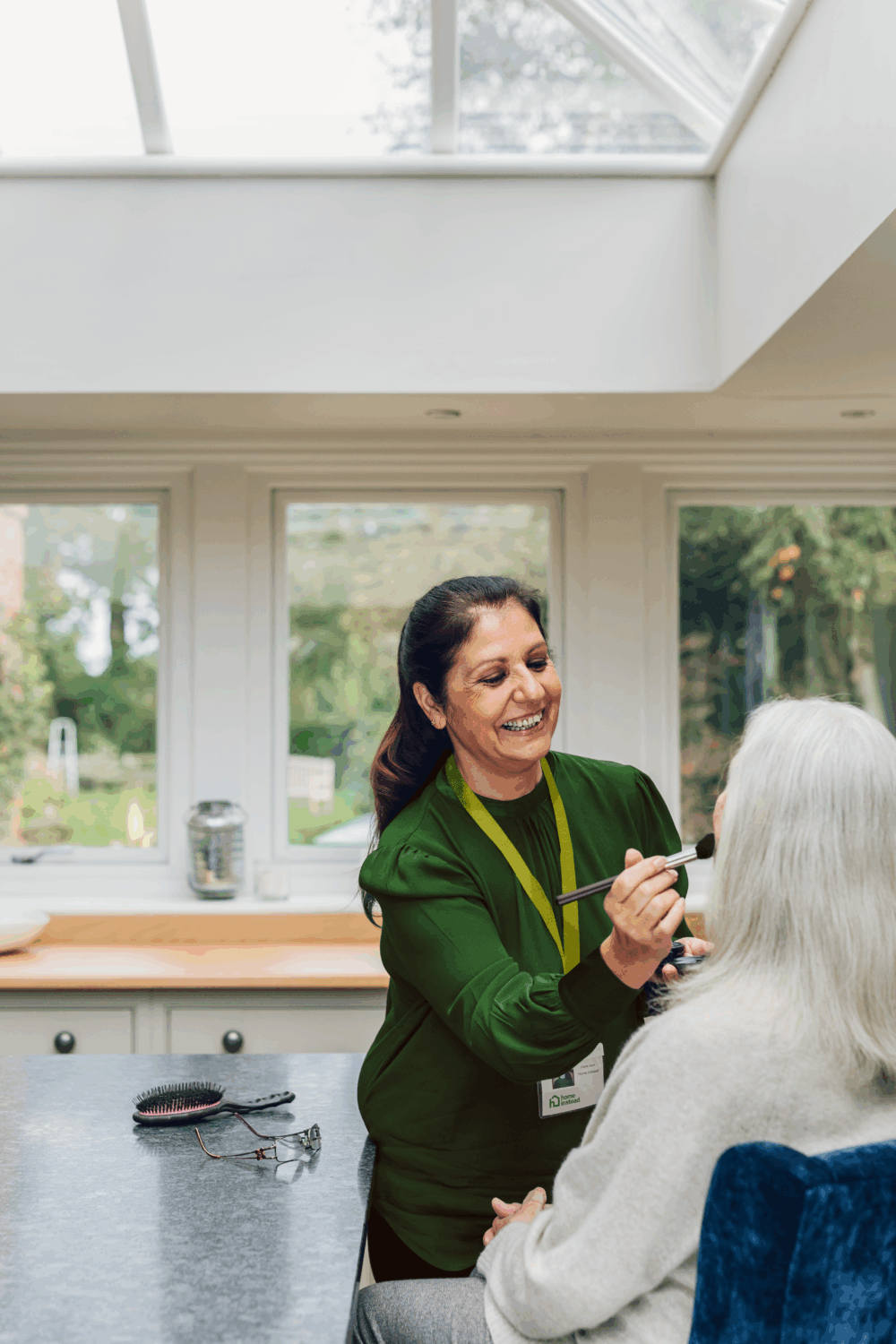
As mobility or strength changes, personal care may require more assistance. Care at home can adapt to include more support with washing, dressing, and grooming, always in a way that protects dignity and comfort.
Supporting safer movement at home
If one partner becomes less steady, care can include support with moving around the home, gentle prompts to take time, and help with day-to-day tasks that might cause strain, such as reaching, bending, or carrying.
Helping with routines that protect wellbeing
Regular meals, hydration, medication prompts, and a calm daily structure can make a meaningful difference. As needs increase, care can focus more on keeping these routines consistent, which can support comfort and confidence at home.
Supporting the caring partner to rest
One of the most valuable parts of adaptable care is what it gives back to the partner who has been doing most of the caring. Having planned support means they can rest, attend appointments, see friends, or simply have a quiet hour without feeling they must always be “on duty”.

Keeping both partners at the centre of the care plan
When care is introduced for one partner, it still affects both people. A thoughtful approach considers the couple’s routines and preferences, not only the tasks that need doing.
A good care plan will often include:
- The times of day that feel hardest for the couple.
- What the partner receiving care wants to keep doing themselves.
- The caring partner’s wellbeing, energy, and boundaries.
- How to maintain privacy and a sense of normal home life.
- How to adjust support gradually, without rushing changes.
This helps care feel like an extension of daily life, rather than something that takes over.

Talking about care without causing upset
It is common for couples to feel unsure about how to start the conversation. It may help to frame care as support for both people, not a judgement on anyone’s ability.
Gentle phrases can include:
- “I want things to feel easier for us both.”
- “Let’s look at a bit of extra help so we can enjoy more time together.”
- “We can start small and see how it feels.”
If one partner is hesitant, focusing on staying at home, keeping routines, and reducing stress can feel more reassuring than talking about long-term change.

Your local Home Instead team
If you are considering private care at home, your local Home Instead team can help you explore options in a calm, practical way. They can talk through how care can begin gently and adapt as one partner’s needs increase, while keeping the couple’s routines and choices at the centre.
Home Instead office name:
Home Instead South Manchester
Office phone number:
0161 884 0562
Office website URL:
http://homeinstead.co.uk/south-manchester
Google Business Profile link:
https://maps.app.goo.gl/gw2A9JAoSZ3asQEN9
Areas covered (towns/villages/communities):
Chorlton-cum-Hardy, Urmston, Didsbury
Postcodes served:
M14 4, M14 5, M14 6, M14 7, M16 0, M16 7, M16 8, M16 9, M17 1, M17 8, M19 1, M19 2, M19 3, M20 1, M20 2, M20 3, M20 4, M20 5, M20 6, M21 0, M21 7, M21 8, M21 9, M31 4, M32 0, M32 8, M32 9, M41 0, M41 5, M41 6, M41 7, M41 8, M41 9

Ratings and compliance
Homecare.co.uk rating: 10 out of 10
Profile link: https://www.homecare.co.uk/homecare/agency.cfm/id/65432212321
CQC rating: Good
CQC report link: https://www.cqc.org.uk/location/1-2013663640

A simple next step
If you feel routines are becoming harder to manage as a couple, it may help to explore our private care at home page and speak with the Home Instead South Manchester office. A friendly conversation can help you understand how private care at home could support one partner’s increasing needs, while protecting the balance, comfort, and familiarity of home life.