Do You Need Home Care or Live-in Care, and What’s the Real Difference?

When you start looking for support for an ageing parent, partner, or relative, the language can feel like a maze. “Home care”, “domiciliary care”, “hourly care”, “live-in care”, “24-hour care” and “24/7 care” are often used as if they mean the same thing, yet they usually point to very different day-to-day realities, especially overnight.
This matters because care needs rarely change on a tidy timeline. A fall, a hospital stay, a new diagnosis, or a gradual change in memory can shift what feels safe at home. Many families only start researching when emotions are already high and decisions feel urgent. Clear wording helps you plan with more confidence and less panic.
At Home Instead Hamilton, we meet many families at this exact moment: worried, trying to do the right thing, and unsure what level of support will actually work in real life. Let’s break down the labels in plain English, so you can match care to needs, routines, and risks, rather than guessing based on job titles.

Why the labels matter when needs increase
A common question is: “Do we need someone there all the time, or just at certain times?” The honest answer depends on what “all the time” means in practice.
For example, overnight support can look very different depending on the arrangement:
- In some set-ups, a care professional stays awake and alert through the night.
- In others, a care professional sleeps during the night and is expected to help only if needed.
- Some arrangements mean one carer stays in the home for several days, while others use multiple carers working shifts.
These details shape safety, privacy, continuity, and cost. They also affect how supported someone feels. Care is not only about tasks. After a health event, many older adults feel anxious, isolated, or less confident. Gentle reassurance and company can be as important as help with meals or medication prompts.

What domiciliary care is (and why it’s often called hourly care)
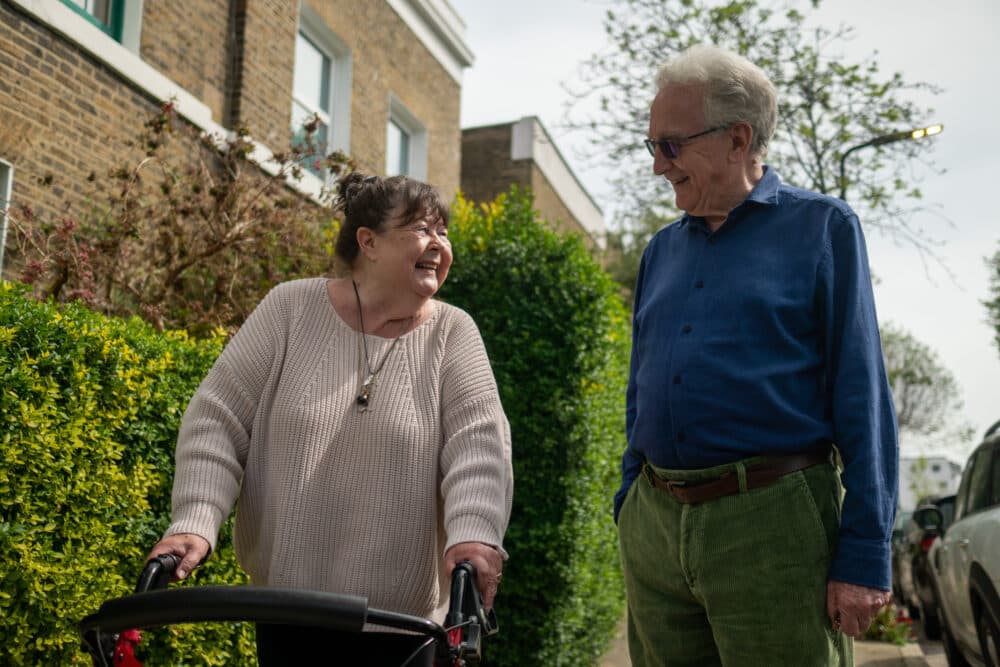
Domiciliary care means care delivered in someone’s own home through planned visits. You may also hear it called “home care” or “hourly care”. The key feature is timing: support happens in short visits, and the person usually has the home to themselves between those visits.
Hourly care can work well when someone is safe alone for parts of the day, but needs help at specific points. It can also suit families who share responsibilities, using care visits to cover the gaps.
Hourly care may support daily living and routines that have become harder over time, such as:
- Help with washing, dressing, and personal hygiene
- Meal preparation, snacks, and support with eating and drinking
- Medication prompts and routine support
- Light housekeeping linked to wellbeing, such as washing up, laundry, changing bedding, and basic cleaning
- Shopping, collecting prescriptions, and help with errands (depending on the service)
- Mobility support, safe movement, and transfers
- Companionship, conversation, and reassurance
- Support getting to appointments or social activities (depending on the service)
Some services may offer check-in calls too. For some people, a calm voice and a gentle nudge can help them stay on track with meals, hydration, and medication, while keeping independence between visits.
What live-in care is, day to day
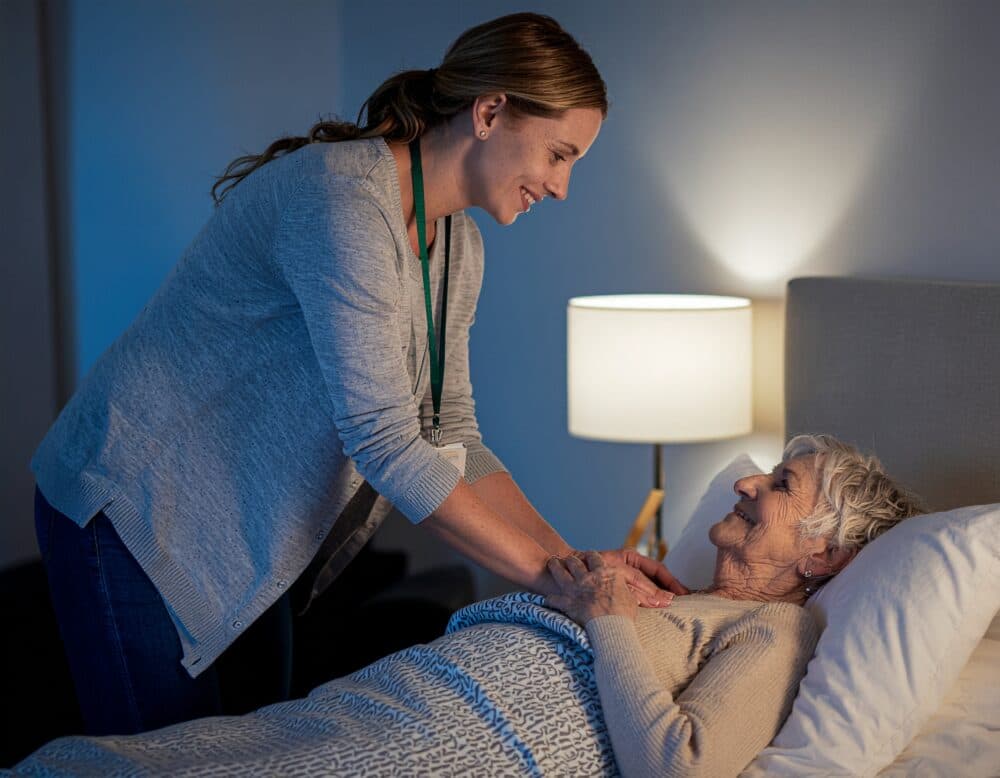
Live-in care means a care professional stays in the person’s home and supports them across the day, every day. It can be short-term, such as after surgery or following a hospital discharge, or long-term for ongoing needs.
Live-in care often includes many of the same practical tasks as visiting care, but the biggest difference is availability. Help is there across the day without waiting for the next scheduled visit. That can reduce anxiety for the person receiving care and ease pressure on family members.
Live-in care can include:
- Personal care and continence support
- Meal planning and cooking that fits the person’s usual routine
- Housework, laundry, shopping, and day-to-day household help
- Medication prompts and support with routines
- Mobility support, transfers, and safe movement around the home
- Companionship and reassurance
- Help getting out and about, where appropriate
- Support for longer-term needs such as dementia, where routine and familiarity can help someone feel more settled
In many live-in arrangements, a small team rotates. Two or three carers may alternate, each staying for a set number of days before handover. Because the carer is living in the home, there usually needs to be a private bedroom and access to basic facilities. There also needs to be a clear plan for rest time.
One important point: live-in care is one-to-one support, but it is not always the same as constant, awake supervision overnight. That’s where the “24-hour” wording can cause confusion.
What “24/7 home care” can mean, and how it differs from live-in care
“24/7 care” or “24-hour care” is sometimes used as a general label, but many providers use it to describe shift-based care rather than live-in care.
With shift-based 24/7 care, carers work set shifts so someone is always on duty. A common pattern is 12-hour shifts, with one carer covering daytime hours and another covering night-time hours. This approach usually involves more carers across a week, because nobody can safely work around the clock.
For many families, the key difference is night cover. Shift-based care can be arranged so the night carer is awake and alert. That can matter when night-time risks are high, such as when someone:
- Wanders at night or becomes disorientated
- Has repeated night-time falls, or is unsteady when getting to the toilet
- Needs regular repositioning or physical help overnight
- Feels distressed or anxious after dark
- Needs frequent support overnight that would repeatedly wake a sleeping live-in carer
Some households use an overnight “stand-by” approach, where the carer rests in another room but can help quickly if needed. The right set-up depends on risk, routine, and how often support is needed after bedtime.
Shift-based 24/7 care is often more expensive than live-in care because it usually involves more paid hours and more staff in the rota. Even so, some families choose it because it matches the level of overnight safety they need.

Live-in care and 24/7 shift care: why the cost can be different
Families often ask why two “24-hour” options can have different price points. It generally comes down to staffing and what is expected overnight.
- Live-in care usually includes a defined rest period and an overnight sleep break. If the person needs frequent help overnight, this arrangement may no longer match reality. Some providers may suggest extra night support, which changes the weekly cost.
- Shift-based 24/7 care usually assumes active cover across every hour, often including awake night cover. This creates a different safety net, and it also means more staffed hours.
Put simply:
- Live-in care often fits when someone needs steady daily support, reassurance, and help with routines, but does not need frequent, awake help through the night.
- Shift-based 24/7 care often fits when someone needs supervision and support day and night, with higher-risk nights.

How your home life changes when you move from visits to live-in care
Moving from visiting care to live-in care is not only about adding hours. It changes the household, because another adult shares the space. This can be a real comfort for someone who feels lonely or uneasy, yet it does require planning and clear boundaries.
It helps to talk through practical points early, such as:
- Where the carer will sleep and store personal items
- How shared spaces like the kitchen and bathroom will work
- What privacy looks like day to day
- How family visits will work without the home feeling crowded
- How routines, preferences, and meal choices should be handled
Many issues are avoided by writing down routines and preferences early, including dietary needs, what a “good day” looks like, and how the person likes support to be offered. This is especially helpful when memory problems are involved, or when anxiety rises with change.

Care at home or a care home: what changes in daily life?
When needs become full-time, many families weigh up live-in care at home against moving into a care home.
A care home is communal living. Someone moves into a setting that provides accommodation, meals, and care from a staff team working shifts across multiple residents. Many homes offer group activities and social opportunities, which can appeal to someone who feels isolated at home.
Live-in care keeps the person in their own home. Daily life can stay closer to personal preferences, including meal times, hobbies, familiar routines, and local connections. Many people feel more settled when they can keep their usual environment and belongings close.
Neither option is automatically “better”. The right choice depends on safety, preferences, and what feels sustainable for the whole family.

A practical way to choose: match support to real risks and routines
If the labels feel overwhelming, it can help to map daily routines and risks instead. Ask: what happens on a typical morning, afternoon, evening, and night? Where are the pinch points? What happens when things go wrong?
Here’s a simple way to think it through:
Hourly home care may suit when:
- Support is needed at set times
- The person is safe alone for parts of the day
- The main need is help with tasks rather than supervision
Live-in care may suit when:
- The person benefits from steady daily reassurance
- There is space for a carer to stay overnight
- Overnight needs are limited or occasional
- Companionship plays a big part in wellbeing
Shift-based 24/7 care may suit when:
- Night-time risks are high
- Overnight help is frequent
- The family needs active night supervision rather than sleep cover
A care home may suit when:
- Risks at home are high without multiple staff available
- Supervision needs are constant and complex
- The person prefers communal living and structured activity
- Specialist facilities are needed that are hard to provide at home

Planning earlier can ease pressure later
Many families begin researching after a fall or hospital discharge, when stress levels are high and time feels short. Planning earlier helps everyone understand the language and the trade-offs, and it gives your family more control.
If you can, talk as a family before care becomes urgent. Write down what matters most to the person receiving care, what worries the family, what night-time support is needed, and what home set-up feels acceptable. Even a short list of priorities can make conversations with care providers clearer and calmer.

How Home Instead Hamilton can help
If you’re supporting someone in Hamilton or across South Lanarkshire, you do not need to work all of this out alone. Home Instead Hamilton can talk you through the practical differences between visiting care, live-in care, and other options, based on real routines and real risks, not vague labels.
If you’d like to discuss what support could look like at home, you can start here: https://www.homeinstead.co.uk/south-lanarkshire-hamilton

Areas We Serve
Hamilton, Uddingston, Motherwell, Bothwell, Strathaven, Bellshill, Rutherglen, Cambuslang
G71 5, G71 6, ML2 7, ML4 3, ML1 3, ML1 2, ML2 0, ML4 1, ML4 2, G72 6, G73 5, G71 8, G72 9, G73 4, G71 7, ML1 1, ML1 4, G72 0, ML2 8, ML1 5, G72 8, G72 7
Unit 2 Brandon House Business Centre, 23-25 Brandon St, Hamilton ML3 6DA