How Can You Create a Safe and Comfortable Home for a Loved One with Dementia?
<br /> Create a safe, dementia-friendly home with practical tips for comfort, safety, and independence.
When someone you care about is diagnosed with dementia, it can feel overwhelming. How can you ensure that your home is a place of safety and comfort for them? At Home Instead Ruislip & Harrow, we understand the challenges families face and the importance of creating an environment that supports the needs of a person living with dementia.
In this blog, we’ll guide you through practical tips to make your home more dementia-friendly, helping your loved one maintain independence while staying safe.
Lighting: A Simple Yet Effective Change
Have you ever noticed how lighting affects your mood and orientation in your home? For someone living with dementia, proper lighting can make a significant difference in preventing confusion and accidents.
- Maximise natural light by opening curtains during the day and trimming hedges or trees that block windows.
- Use bright, consistent lighting in areas like hallways, stairs, and bathrooms to reduce shadows, which can cause disorientation.
- Reduce glare by opting for matte finishes and positioning lamps to avoid reflections.

Flooring: Safety Starts from the Ground Up
Could the flooring in your home be a potential hazard? For individuals with dementia, certain types of flooring can lead to confusion or even accidents.
- Remove rugs and mats that can cause trips and falls.
- Avoid shiny or reflective floors, as they can appear wet or slippery to someone with dementia.
- Choose contrasting colours for flooring and walls to make boundaries clearer and reduce confusion.
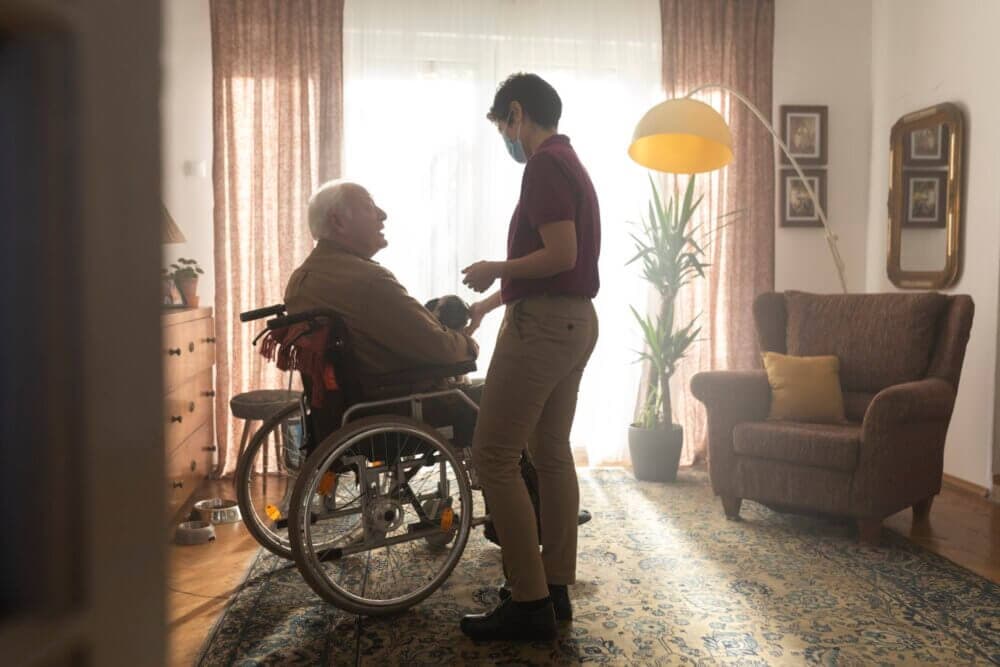
Colour Choices: A Simple Way to Guide and Comfort
Do the colours in your home help or hinder your loved one’s ability to navigate their space? Colour plays a key role in how people with dementia interpret their surroundings.
- Use contrasting colours on walls, furniture, and doors to help your loved one differentiate between spaces.
- Bright colours can help them identify important items like toilet seats, handrails, or doorways.
- Avoid bold patterns, as these can be confusing and lead to anxiety.

Signage and Labels: Clear Communication
Do you have signs or labels in your home to help with navigation? Simple labels can make a big difference for those living with dementia.
- Place clear, easy-to-read signs on doors, cupboards, and switches to help them remember where things are.
- Use images alongside text for a clearer message, and position signs at eye level to make them easy to see.
Reflections: Managing Confusing Visuals
Did you know that reflections can be confusing for someone with dementia? Mirrors and window reflections can be mistaken for other people or objects, causing stress or disorientation.
- Remove or cover unnecessary mirrors to minimise confusion.
- Close curtains at night to prevent reflections from windows that may confuse or distress your loved one.
Assistive Technology: Modern Tools to Support Independence
Have you considered using assistive technology to support your loved one with dementia? Simple devices can help them stay independent while offering peace of mind.
- Phones with large buttons make communication easier.
- Devices with audio reminders, such as “Check the door is locked,” can help maintain routines.
- Clocks displaying the time and date in large print can reduce confusion about time.
- Tablets and smartphones with apps designed for people with dementia can provide additional support.
At Home Instead Ruislip & Harrow, we understand the importance of making your home a safe, supportive space for those living with dementia. Our experienced care professionals are here to provide the compassionate care your loved one needs, allowing them to remain at home where they feel most comfortable. If you have any questions or need support, don’t hesitate to reach out to our team.

Get in Touch
If you need help creating a dementia-friendly environment or want to learn more about our in-home care services, contact us today at 01895 624230. We’re here to support you and your family every step of the way.
