Staying Hydrated in Hot Weather: Helping Older People Stay Safe
Warm weather can be lovely, but when temperatures rise, it is important to take extra care especially for older people.<br /> <br />
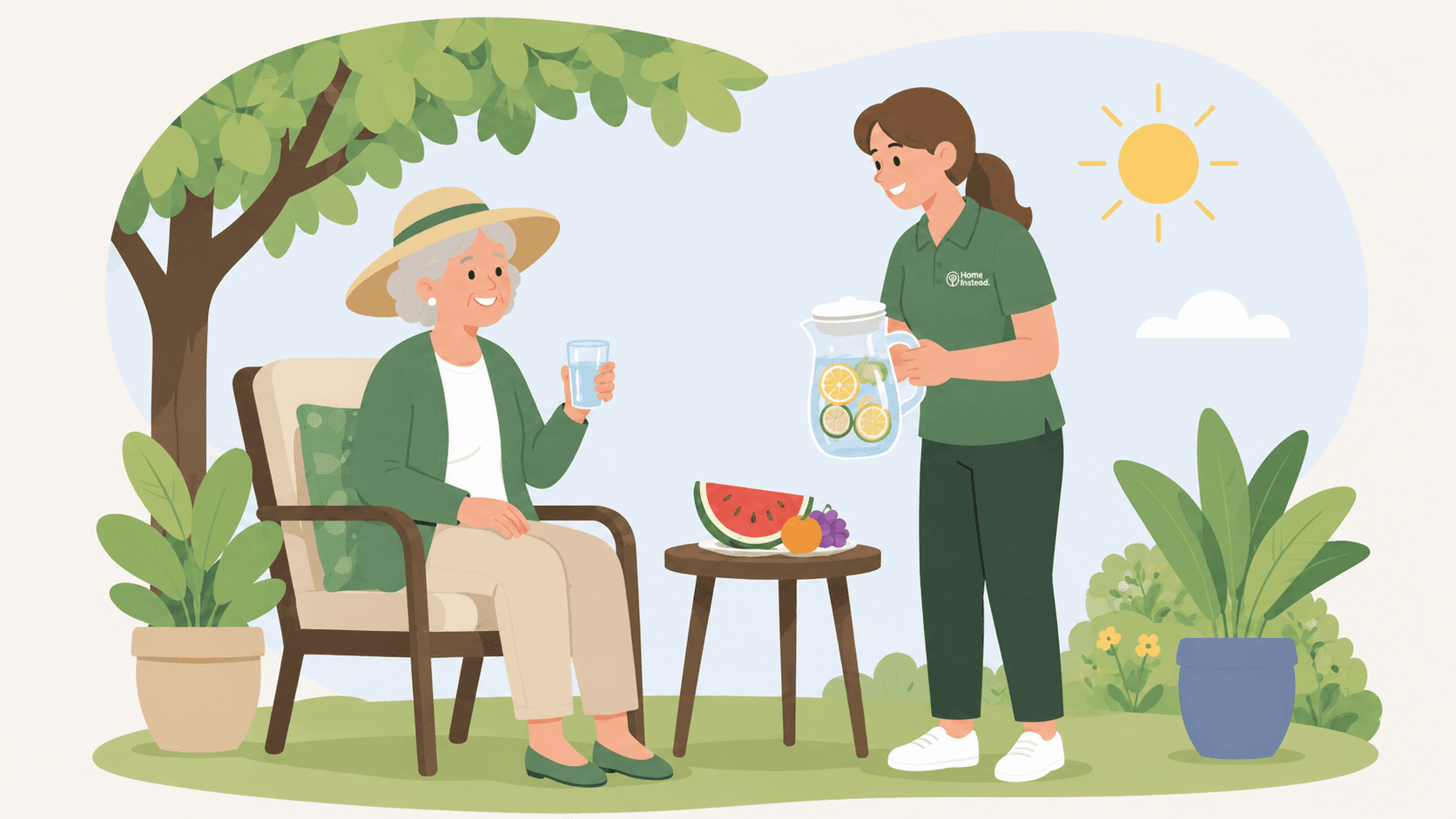
Why hydration matters
In the heat, the body loses more fluid through sweating. If this fluid is not replaced, dehydration can happen. For older people, dehydration can lead to tiredness, dizziness, headaches, confusion and an increased risk of falls.
Signs to look out for include:
- Dry mouth or lips
- Dark yellow urine
- Feeling dizzy or light-headed
- Headaches
- Unusual tiredness
- Confusion or seeming “not quite themselves”
- Passing urine less often than usual
For someone living with dementia or memory problems, they may forget to drink or may not realise they are thirsty. Gentle reminders and keeping drinks nearby can really help.
What to drink and eat
Water is a great choice, but it does not have to be the only option. The most important thing is to drink regularly throughout the day.
Good options include:
- Water
- Diluted squash
- Milk or milky drinks
- Fruit juice in moderation
- Decaffeinated tea or coffee
- Smoothies
- Ice lollies
Foods can help with hydration too. Water-rich foods such as melon, cucumber, tomatoes, oranges, strawberries, yoghurt and soup are good choices, especially if someone does not feel like drinking much.
Things to avoid in hot weather
During very warm weather, try to avoid or limit anything that can make dehydration or overheating worse, such as:
- Alcohol
- Too much caffeine
- Heavy meals
- Sitting in direct sunlight
- Going out during the hottest part of the day
- Strenuous activity in the heat
- Wearing dark, tight or heavy clothing
It is best to stay in the shade where possible, wear loose light clothing, keep rooms cool, and plan any outings for earlier in the morning or later in the day.
Simple ways to help
Small actions can make a big difference. Keep a drink within easy reach, offer regular sips, have a drink with meals and snacks, and check in on older relatives, friends or neighbours during hot weather.
If someone becomes very confused, extremely drowsy, collapses, has a seizure, or symptoms do not improve after cooling down, seek urgent medical help.
Hot weather can be enjoyable, but staying hydrated and keeping cool are key to helping older people stay safe, comfortable and well.