Why Staying in Familiar Surroundings Supports Emotional Wellbeing

When someone begins to need a little more support at home, the practical questions often come first. How will day-to-day routines work? What help is needed, and when? Who can be there reliably? Underneath those questions, there is usually something quieter but just as important: how to help a loved one feel settled, secure, and like themselves.
For many older adults, staying in familiar surroundings can support emotional wellbeing in ways that are easy to underestimate. Home is not only a place to live. It is also where memories sit quietly in the background, where routines feel natural, and where a person’s independence and identity can be preserved with the right kind of support.
This is one reason private care at home can be such a reassuring option for families.

Familiarity brings calm and confidence
A familiar home environment often helps people feel more in control. Even small things can make a difference, such as knowing where the kettle is, recognising the view from the window, or being able to move confidently from room to room without needing directions.
Familiar surroundings can support emotional wellbeing by:
- Reducing day-to-day uncertainty
- Making routines easier to follow
- Helping someone feel capable in their own space
- Supporting a sense of safety and predictability
When life already feels a little changeable, keeping the home environment steady can be a gentle way to reduce stress.

Home is closely tied to identity
People often describe home as part of who they are. It is where they have welcomed friends, raised families, enjoyed hobbies, and built personal routines over many years. These experiences form a sense of identity that does not disappear with age.
Staying at home can help someone maintain the parts of life that still feel familiar, such as:
- Making breakfast the way they like it
- Tending to plants or a garden
- Keeping favourite photos and personal items nearby
- Following small daily rituals, like reading the paper or listening to the radio
Private care at home works best when it respects these routines, rather than replacing them. The goal is not to change a person’s way of life, but to support it.
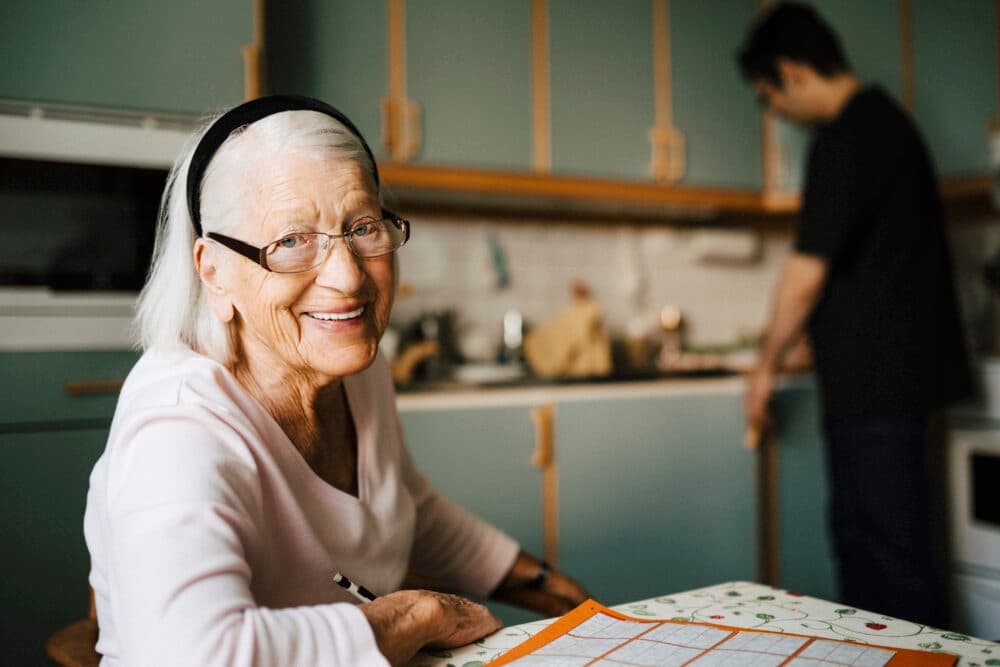
Familiar surroundings can support memory and orientation
Many families notice that a familiar environment can help an older relative feel more grounded, particularly if they are becoming forgetful or easily overwhelmed. At home, everyday items are usually in their expected places. Rooms and belongings provide gentle prompts that help with orientation and confidence.
This can be especially supportive when someone:
- Finds busy environments tiring
- Needs extra time to process information
- Benefits from a steady routine
- Feels more comfortable with things they recognise
Private care at home can complement this familiarity by offering consistent support, delivered in a calm and respectful way.
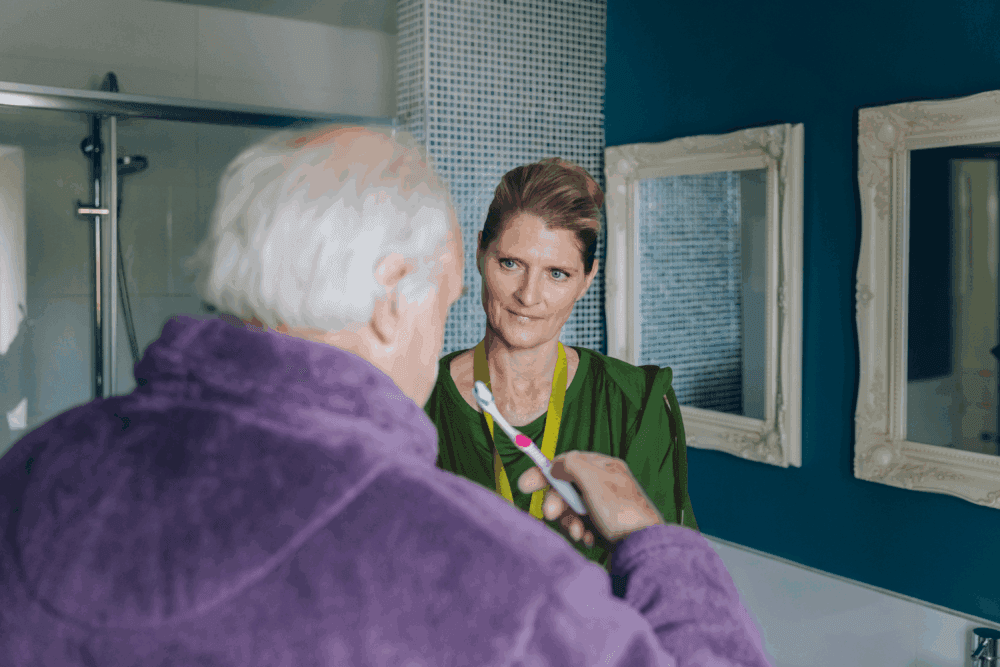
Staying connected to the local community matters
Emotional wellbeing is not only about the home itself, but also about what surrounds it. For many older adults, local connections are a source of comfort. That might mean a short chat with a neighbour, a familiar route to the shops, or simply recognising the area outside.
People often feel closely tied to their community. Staying in familiar surroundings can make it easier to continue with:
- Friendly, familiar faces nearby
- Regular visits from family and friends
- Local routines, such as a weekly shop or a walk
- Meaningful places, such as parks or local cafés
Even if someone’s world becomes smaller over time, staying near what they know can help them feel less cut off.

How private care at home supports emotional wellbeing
Private care at home can be flexible, shaped around the person’s routine and the family’s needs. It can also be introduced gradually, which helps many people feel comfortable with support.
Home Instead’s Care Professionals can help with practical tasks, while also providing steady companionship and reassurance. Support might include:
- Help with getting up, washing, and dressing at an unhurried pace
- Meal preparation and gentle reminders to eat and drink regularly
- Light housekeeping to keep the home comfortable and safe
- Support with appointments or outings, where appropriate
- Friendly conversation and companionship
- Helping someone keep to routines that matter to them
For families, it can be a relief to know that support is available without disrupting the home life that is already familiar.
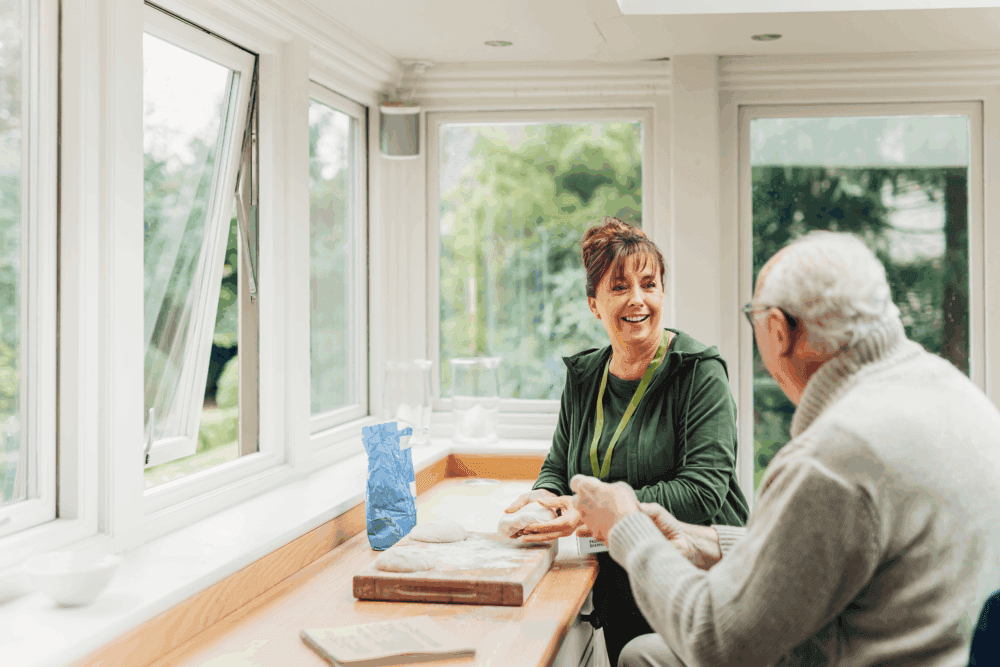
A note on companionship and confidence
Emotional wellbeing often improves when someone feels understood and not rushed. A consistent Care Professional can bring a calm presence that helps a person feel more at ease in their day-to-day life. Over time, this can support confidence and reduce feelings of uncertainty.
It is not about forcing cheerfulness or changing someone’s personality. It is about being there, listening, and providing steady support in a way that respects the person and their home.
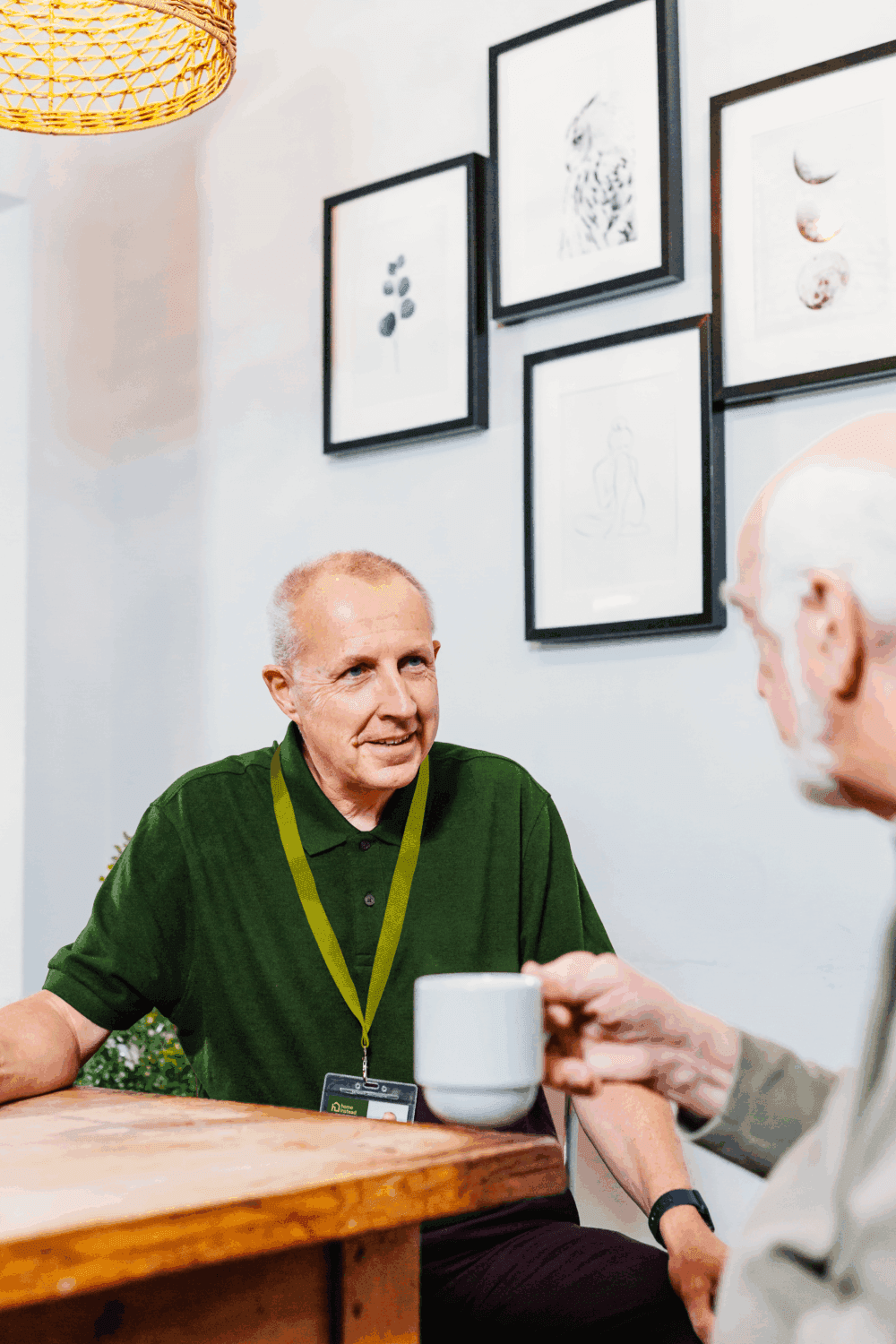
Small adjustments, not big upheavals
Sometimes families worry that accepting care means giving up independence. In reality, private care at home often helps people keep doing what they enjoy, simply with a little support around the edges.
Care can be arranged in a way that feels natural, for example:
- A short daily visit to help with morning routines
- A few visits a week to support meals, laundry, or errands
- Longer visits to provide companionship and practical help
- More regular support if needs change over time
This approach allows families to respond to what is needed now, without making decisions based on pressure or uncertainty.
Your Local Home Instead Team
Home Instead office name: Home Instead East Cheshire
Office phone number: 01625 860992
Office website URL: http://homeinstead.co.uk/East-Cheshire
Google Business Profile link: https://maps.app.goo.gl/aG7iXLSfroHb6euk9
Areas covered (towns/villages/communities): Jodrell Bank, Alderley Edge, Macclesfield, Pott Shrigley, Wilmslow, Congleton, Lower Withington, Prestbury, Adlington, Timbersbrook
Postcodes served: CW12 1, CW12 2, CW12 3, CW12 4, SK10 1, SK10 2, SK10 3, SK10 4, SK10 5, SK11 0, SK11 6, SK11 7, SK11 8, SK11 9, SK12 1, SK9 1, SK9 2, SK9 3, SK9 4, SK9 5, SK9 6, SK9 7
If you are considering private care at home and want to talk things through, you can contact the local team using the details above. They can explain how support works, discuss routines and preferences, and help you explore the right level of care at home.

Ratings and compliance
Homecare.co.uk rating: 9.9 out of 10
Profile link: https://www.homecare.co.uk/homecare/agency.cfm/id/65432184386
CQC rating: Outstanding
CQC report link: https://www.cqc.org.uk/location/1-1348699879
A gentle next step
If you would like to understand more about what private care at home could look like, explore the Private Care at Home page. When you feel ready, you can also contact the Home Instead East Cheshire office to discuss your situation and the kind of support that may help your loved one stay comfortable and well at home.