How to Talk to an Elderly Parent About Getting Help at Home: A Gentle Guide for Families in Monmouth
A gentle guide to talking to an elderly parent about getting help at home. Practical advice from Home Instead Monmouth.
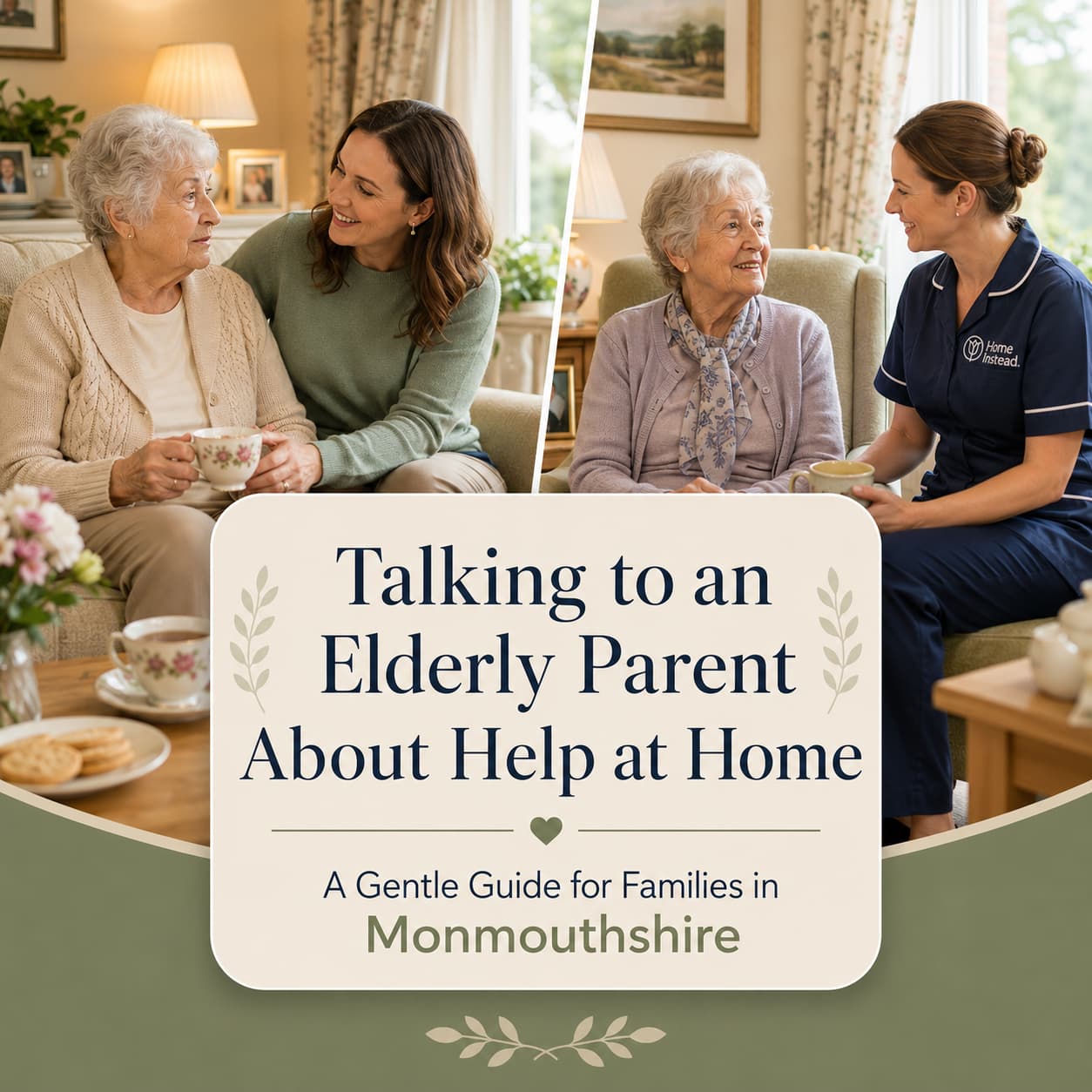
It’s a conversation most families put off for months, sometimes years. You’ve started noticing things – the unopened post on the kitchen table, the fridge that’s emptier than it should be, the same slightly-worn cardigan every visit. Something needs to change, and you know it. But how on earth do you raise it with a proud, independent parent who’s always been the one looking after everyone else?
At Home Instead Monmouth, Abergavenny and Pontypool, we’ve helped hundreds of local families navigate this exact conversation. Rated 9.6/10 on homecare.co.uk and named a Top 20 Home Care Provider in Wales, our mother-daughter led team – Karen and Laura Clatworthy – know that how you have the conversation often matters as much as what you say. Here’s a gentle, honest guide to help you do it well.
Why this conversation is so hard
When we tiptoe around this conversation, it’s not because we don’t care – it’s because we care too much. On both sides, there’s a lot going on beneath the surface:
- For your parent – fear of losing independence, of being seen as “past it”, of losing their home, of becoming a burden, of admitting that things really have changed.
- For you – guilt at raising it, worry about upsetting them, uncertainty about what to actually suggest, and often a fair amount of grief at the role reversal.
Recognising all of that – in yourself and in them – before you sit down to talk is half the battle.
Before you have the conversation
A few small preparations make an enormous difference:
- Choose your moment – not five minutes after they’ve had a fall or an argument. A quiet afternoon, over a cup of tea, on a day when nobody’s in a rush.
- Have it in person – not on the phone, not on WhatsApp. Face to face, ideally in their own home where they feel most secure.
- Come alone or in a small pair – the whole family arriving at once can feel like an ambush.
- Know what you’re actually suggesting – a vague “we need to talk about you getting some help” is much harder to hear than “I’ve been reading about companionship visits and I’d love to tell you what they involve”.
- Prepare for it to take more than one conversation – in fact, expect it to. The first talk is rarely the one that lands the decision.
How to open the conversation
The most successful conversations don’t start with “I’m worried about you”. They start with curiosity, warmth and questions. A few openers families have told us worked well:
- “How are you finding things at home lately, honestly?”
- “I noticed the garden’s getting away from you a bit – is there anything I could help sort out?”
- “Would you fancy having someone pop round for a cuppa and a chat during the week?”
- “I read about something in Monmouth that I thought might interest you – can I tell you about it?”
- “Sue next door had someone come to help her mum a couple of times a week and she said it was brilliant. I wondered whether we could look into it for you.”
Notice what those openers have in common? They’re gentle, they’re curious, they position help as something normal and helpful – not as a red flag that “we’ve decided you can’t cope.”
The words that help – and the ones that don’t
Small language choices can change the whole tone of the conversation.
- Try: “a bit of help”, “companionship visits”, “someone friendly to lend a hand”, “extra pair of hands”
- Avoid: “a carer”, “a stranger coming in”, “you can’t manage anymore”, “we’ve decided”, “we’ll be doing it whether you like it or not”
For most older people, the word “care” itself can feel loaded – as if it means they’ve become someone who needs looking after in a way that feels final. Words like “companionship” and “help” often land much more gently, especially at the start.
Handling the pushback – because there usually is some
Even the best conversation is likely to hit some resistance. The most common objections we hear from older parents include:
- “I don’t want a stranger in my house” – this is where consistent Care Professionals matter enormously. We match each client with the same small team, so it stops being “a stranger” after the first visit or two.
- “I’m fine, I don’t need it” – gently reframe it as something for you rather than them: “I’d feel so much better knowing someone was popping in on Tuesdays.”
- “It’s too expensive” – help them see the sums. Even a single weekly companionship visit is often surprisingly affordable, and there may be local authority or NHS funding to explore.
- “What will people think?” – validate that feeling, then normalise it. Home care is now used by hundreds of families across Monmouthshire.
- “Let’s just see how things go” – agree, and then gently suggest a trial: “Shall we just try a couple of visits and you can tell me if you hate it?”
The trial-visit approach is often the single most effective way through resistance. It reframes the whole thing from a permanent, life-altering decision into simply trying something and seeing.
When you and your parent see it differently
Sometimes families face a harder situation – you can see clearly that help is needed, but your parent cannot, or won’t. If safety isn’t at immediate risk, patience is usually the answer. Return to the conversation another day, ideally after another gentle prompt (a small incident, a mention in the news, a friend of theirs starting home care).
If safety is at risk – falls, medication mistakes, wandering, poor nutrition – then it’s time to bring in professionals to help you have the conversation. Your parent’s GP, or a home care provider like us, can visit and talk through options in a way that feels less like a family disagreement and more like a routine assessment. That change of framing often makes all the difference.
How Home Instead Monmouth can help – quietly and gently
When you’re ready, we can offer a free, no-obligation home visit – at a time that suits you and, ideally, with your parent present. We come to listen, not to sell. We chat over a cup of tea. We answer questions. We explain what companionship visits, personal care, or specialist support could look like. And we never pressure anyone to make a decision that day.
For many families, that single relaxed visit is enough to break the deadlock. Your parent meets one of our team, gets a feel for how we work, realises we’re not scary, and the door opens.
Why families across Monmouthshire trust Home Instead
- 9.6/10 on homecare.co.uk – from families who’ve been through this exact conversation.
- Top 20 Wales – named among Wales’ top home care providers.
- Locally led – by our mother-daughter team, Karen and Laura Clatworthy.
- Minimum one-hour visits – time to build a proper relationship.
- Consistent Care Professionals – the same familiar faces every time.
- City & Guilds accredited dementia training – specialist expertise for families where memory changes are also part of the picture.
When you’re ready to talk, we’re here
If you’re gearing up to have this conversation with a loved one in Monmouth, Abergavenny, Pontypool or anywhere across Monmouthshire, please do get in touch – even if it’s just for a chat before you say anything to them. We can talk through what to say, what to expect, and what a first visit might involve.
Call our friendly Monmouth team today on 01873 772772 or visit our website to arrange a free, no-obligation home visit. We’ll listen, answer your questions, and help you work out the right next step – gently and at your family’s pace.