Technology and Telecare at Home: What Actually Helps
Personal alarms, sensors, video calling and care apps – what genuinely helps older people stay safe at home, and what it cannot do.
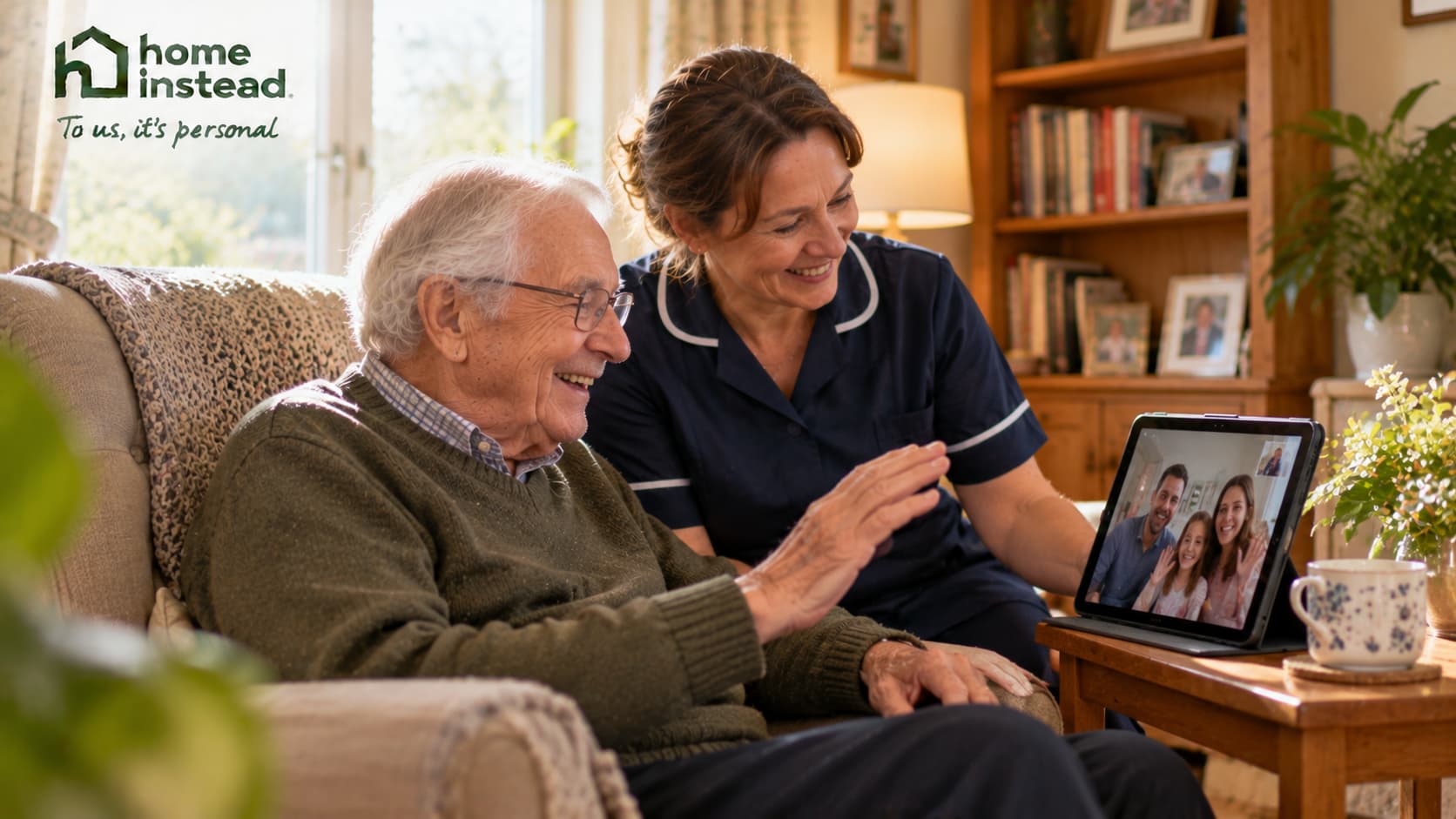
There is no shortage of gadgets sold on the promise of keeping an older person safe. Pendant alarms, motion sensors, smart speakers, fall detectors, cameras, medication dispensers that beep and dispense and send you a text. Some of it is genuinely useful. Some of it ends up in a drawer within a fortnight.
This is a plain guide to what tends to work, what tends not to, and where technology helps most which, in our experience across Newport, Cwmbran and Chepstow, is almost always alongside people rather than instead of them.
What telecare actually means
Telecare is the umbrella term for equipment in someone’s home that can raise an alarm or alert somebody when help is needed. At its simplest it is a pendant with a button. At the other end it is a set of linked sensors that notice when something is wrong without anyone pressing anything.
In Wales, local councils run telecare services, and in our area that means Newport City Council or Monmouthshire County Council depending on where your loved one lives. A care needs assessment is the usual route in, and it is free to ask for one. There is normally a weekly or monthly charge for the service itself.
The things most worth having
- A personal alarm pendant still the single most useful piece of equipment there is. Worn around the neck or wrist, one press connects to a monitoring centre. The catch is that it only works if it is actually worn. Pendants left on the bedside table have saved nobody.
- A key safe unglamorous, and it makes everything else work. Without one, an emergency response means a forced door.
- Fall detectors worn devices that raise an alarm automatically if someone falls and cannot press the button. Useful for anyone at real risk, and worth pairing with proper work on preventing falls rather than relying on alone.
- Smoke, heat and flood sensors linked to the monitoring centre rather than just beeping in an empty house. Particularly valuable where someone still cooks but is becoming forgetful.
- A simple video calling setup a tablet on a stand, set to answer automatically from approved contacts. For families who live away, the difference between a phone call and seeing someone’s face is considerable.
- Automatic lighting motion-activated lights on the landing and bathroom route cost very little and prevent a genuine number of night-time falls.
The things that often disappoint
Not because the technology is bad, but because of how it meets real life:
- Anything with a complicated interface if it needs a password, an update or a charge cycle somebody has to manage, it will stop working within weeks unless a family member or carer takes that on.
- Medication dispensers, used alone they will beep and release the right tablets at the right time. They cannot tell whether the tablets were swallowed, spat out or left on the side. They work best alongside medication support from someone who checks.
- Cameras these need thinking about very carefully. They can be reassuring for family and quietly humiliating for the person being watched. If they are used at all, the person should know, agree, and ideally choose where they go. A camera in a bedroom or bathroom is almost never the right answer.
- Voice assistants genuinely useful for some people, particularly for reminders and music. Confusing for others, especially where memory or hearing is affected. Worth trying, not worth assuming.
What technology cannot do
An alarm summons help after something has gone wrong. It does not notice that someone has eaten nothing but toast for four days, or that they are more confused this week than last, or that they have stopped answering the door to neighbours. It cannot make a cup of tea, help someone into the shower, or sit and talk.
The families who get the most out of technology are the ones who use it to cover the gaps between visits rather than to replace them. A pendant alarm and three companionship visits a week is a genuinely strong arrangement. A pendant alarm and nothing else is a safety net under an empty stage.
Introducing it without it feeling like surveillance
Most resistance is not about the device. It is about what accepting it seems to admit. A few things that help:
- Introduce one thing at a time, not a whole system
- Frame it around independence a pendant means staying at home longer, not being watched
- Let them choose where things go, and what they are willing to have
- Be straight about what it does and does not record
- Start with something that has an obvious everyday benefit, like video calls with grandchildren
- Accept a no, and come back to it later
How we work alongside it
Our Care Professionals are used to homes with telecare in them. In practice that means checking the pendant is being worn and charged, testing that the key safe code still works, making sure the tablet is plugged in before a family video call, and flagging to the family when a piece of equipment has quietly stopped being used.
Families also get updates through our own Care App after each visit, which for anyone living at a distance is often the most valuable technology in the arrangement. It is particularly reassuring in the weeks after coming home from hospital, and alongside overnight care when nights have become unsettled.
Where to start
- Ask the council for a care needs assessment it is free and it is the main route into telecare
- Ask the GP about a falls assessment if falls are the concern
- Ask an occupational therapist about equipment and home adaptations
- Age Cymru can advise on what is available locally and what it costs
Related guides from our team
- Preventing Falls at Home
- Dementia Care at Home in Newport, Cwmbran & Chepstow
- Medication Support at Home in Newport, Cwmbran & Chepstow
- Overnight Care in Newport, Cwmbran & Chepstow
- Companionship Care in Newport, Cwmbran & Chepstow
Talk to your local team
If you are weighing up what would actually help a loved one in Newport, Cwmbran or Chepstow stay safe at home, we are happy to talk it through including where we think technology on its own would be enough.
Call our friendly team today on 01633 740028 or visit our website to arrange a free, no-obligation care consultation.