Diabetes Care at Home: Supporting an Older Loved One
Supporting an older person with diabetes at home – routine, monitoring, foot care and spotting a hypo early. A practical guide for families.
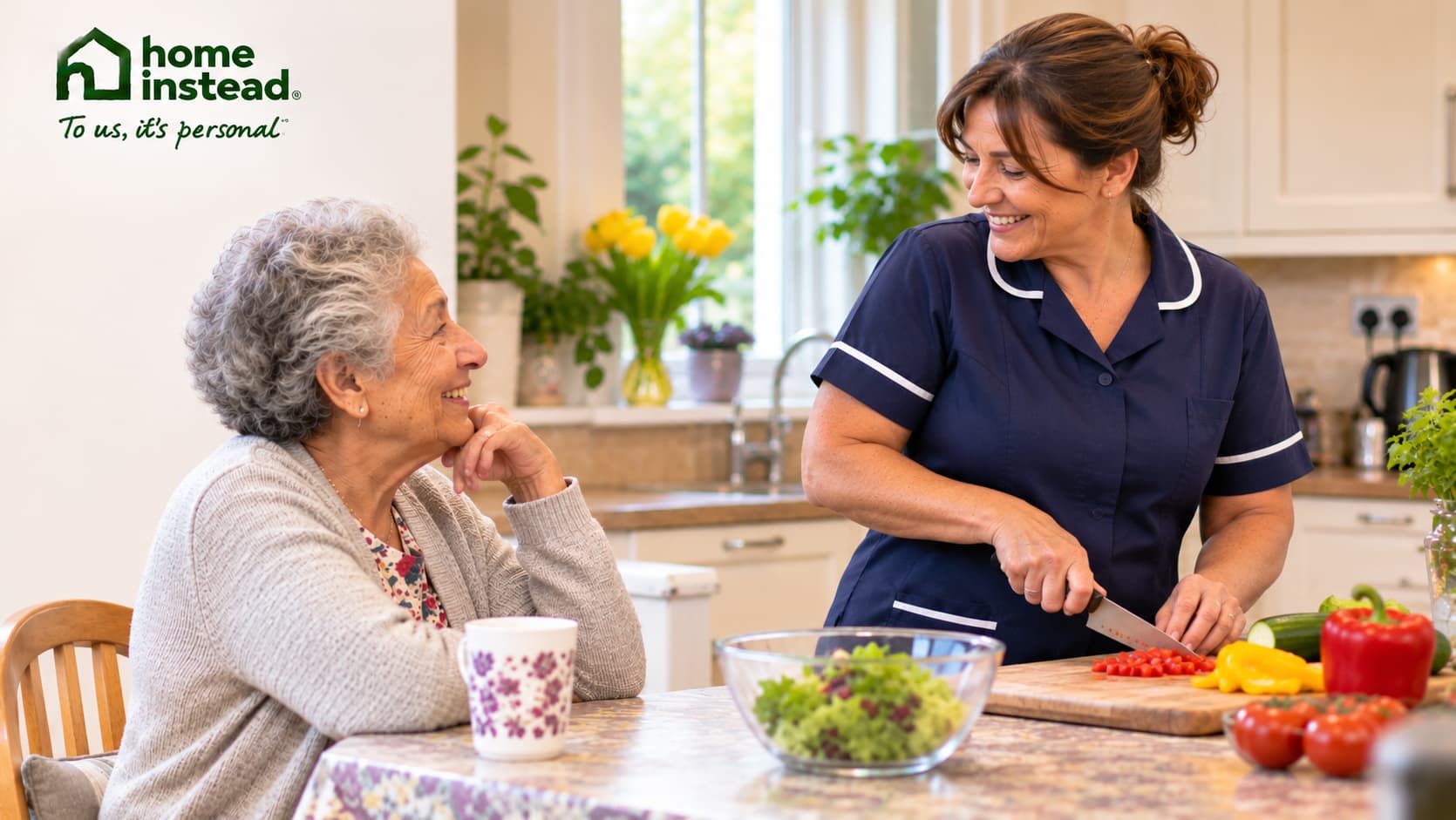
Diabetes is one of the most common long-term conditions in later life, and for most people it is manageable for decades. What changes as someone gets older is not usually the diabetes itself it is everything around it. Meals become irregular. Tablets get missed. Feet stop being checked because bending down is hard. And the signs of a hypo start to look very like something else.
This is a practical guide for families supporting an older person with diabetes at home across Newport, Cwmbran and Chepstow.
A clear note on what we do and do not do
Our Care Professionals support the routine around diabetes: regular meals, medication reminders, blood glucose checks where this is agreed in the care plan, foot care awareness, and noticing when something changes. We are not nurses. Adjusting insulin, changing doses, or making clinical decisions is for the GP, the diabetes specialist nurse or the district nursing team. Everything we do is written into the care plan and overseen by our Registered Care Manager, Nesta Bishop. This forms part of our wider health and complex care service.
Hypos: the thing to understand first
A hypo low blood sugar is the most immediate risk, particularly for anyone on insulin or certain tablets such as gliclazide. In older people it is frequently missed, because the signs are easily attributed to something else.
Signs to know:
- Shakiness, sweating, pallor
- Sudden confusion, irritability or unusual behaviour
- Slurred speech or unsteadiness which is often mistaken for a stroke or for drink
- Hunger, headache, blurred vision
- Drowsiness or difficulty waking
The treatment is fast-acting sugar glucose tablets, a small glass of fruit juice or full-sugar cola followed by something starchy such as a biscuit or a slice of toast once they have recovered. Anyone who becomes unresponsive or cannot swallow safely needs an ambulance.
Two things worth flagging particularly. First, repeated hypos are a reason to go back to the GP the medication may need reviewing rather than the person simply being more careful. Second, in someone with memory problems, a hypo can look almost exactly like a bad day with their dementia, which is why it gets missed. If confusion comes on suddenly, think about blood sugar before assuming it is cognitive.
Feet: the part that gets neglected
Diabetes reduces sensation and blood flow to the feet, which means a small injury can go unnoticed and heal badly. This is the single most preventable cause of serious complications, and it is also the thing most likely to be skipped when someone cannot reach their own feet or see them properly.
- Feet should be looked at every day redness, cuts, blisters, swelling, changes in colour
- Washed and dried carefully, especially between the toes
- Well-fitting shoes, and never walking barefoot
- An annual foot check is part of standard diabetes care it should be happening
Important: anyone with diabetes should have their toenails cared for by a registered podiatrist, not cut as part of a routine cosmetic nail service. A small nick to a diabetic foot is not a small thing. Our Care Professionals will support daily checks, washing and drying, and flag anything that looks wrong but nail cutting here belongs with podiatry, and the GP can advise on an NHS referral.
Meals and routine
For an older person with diabetes, regularity matters more than restriction. Skipped meals are a far bigger risk than the occasional slice of cake, particularly for anyone on medication that lowers blood sugar.
- Regular meals at roughly consistent times, especially where medication is timed around food
- Something starchy at each meal rather than long gaps
- Plenty of fluids dehydration pushes blood sugar up and causes confusion
- Hypo treatment kept somewhere obvious and within reach, including by the bed
If appetite has dropped or weight is falling, that is worth raising with the GP rather than simply accepting. In later life, under-eating is usually the greater danger.
Sick day rules
Illness changes everything. Even a chest infection or a stomach upset can send blood sugar up sharply, and people on certain medicines may be advised to stop them temporarily while unwell. Most people with diabetes are given sick day rules by their diabetes team it is worth finding them, printing them out, and keeping them somewhere the whole family and any carers can see. If nobody can find them, ask the GP or pharmacist.
What should be happening every year
- A diabetes review with the GP or practice nurse, including HbA1c
- A foot check
- Diabetic eye screening a separate appointment from a normal eye test, and genuinely important
- Blood pressure and kidney function checks
- A medication review, particularly where several medicines are involved
These appointments are easy to miss when someone no longer drives or finds it hard to get out. Getting to them is something our Care Professionals regularly help with.
How home care helps
- Routine regular meals and medication at consistent times, which is most of good diabetes management in practice.
- Monitoring supporting blood glucose checks where agreed, and keeping a clear record.
- Medication support so doses are not missed or doubled.
- Daily foot checks as part of personal care, with anything unusual reported straight away.
- Spotting change early new drowsiness, confusion, thirst or unsteadiness that raises the risk of falls.
- Getting to appointments reviews, screening and podiatry.
- Support after a hospital stay where medication has often changed. Our guide on coming home from hospital covers the first fortnight.
Related guides from our team
- Health and Complex Care at Home in Newport, Cwmbran & Chepstow
- Medication Support at Home in Newport, Cwmbran & Chepstow
- Personal Care at Home in Newport, Cwmbran & Chepstow
- Preventing Falls at Home
- Hospital to Home Care in Newport, Cwmbran & Chepstow
Talk to your local team
If someone you love in Newport, Cwmbran or Chepstow is finding diabetes harder to manage on their own, we would be glad to talk about what support would help.
Call our friendly team today on 01633 740028 or visit our website to arrange a free, no-obligation care consultation.