Explore care at home and live-in support through real family stories
Explore care at home and live-in support through real family stories and answers to common questions.
Finding the right care and support for your family
Perhaps Mum is finding everyday tasks harder, you’re worried Dad is spending too much time on his own, or the family is struggling to manage everything between you. You know some help would make a difference, but knowing where to start can feel overwhelming.
At Home Instead Altrincham, Sale & Wythenshawe, we help families explore care at home, from regular visits to live-in support. Here, we answer questions families often ask us, using real experiences to help you picture what could work for your loved one.
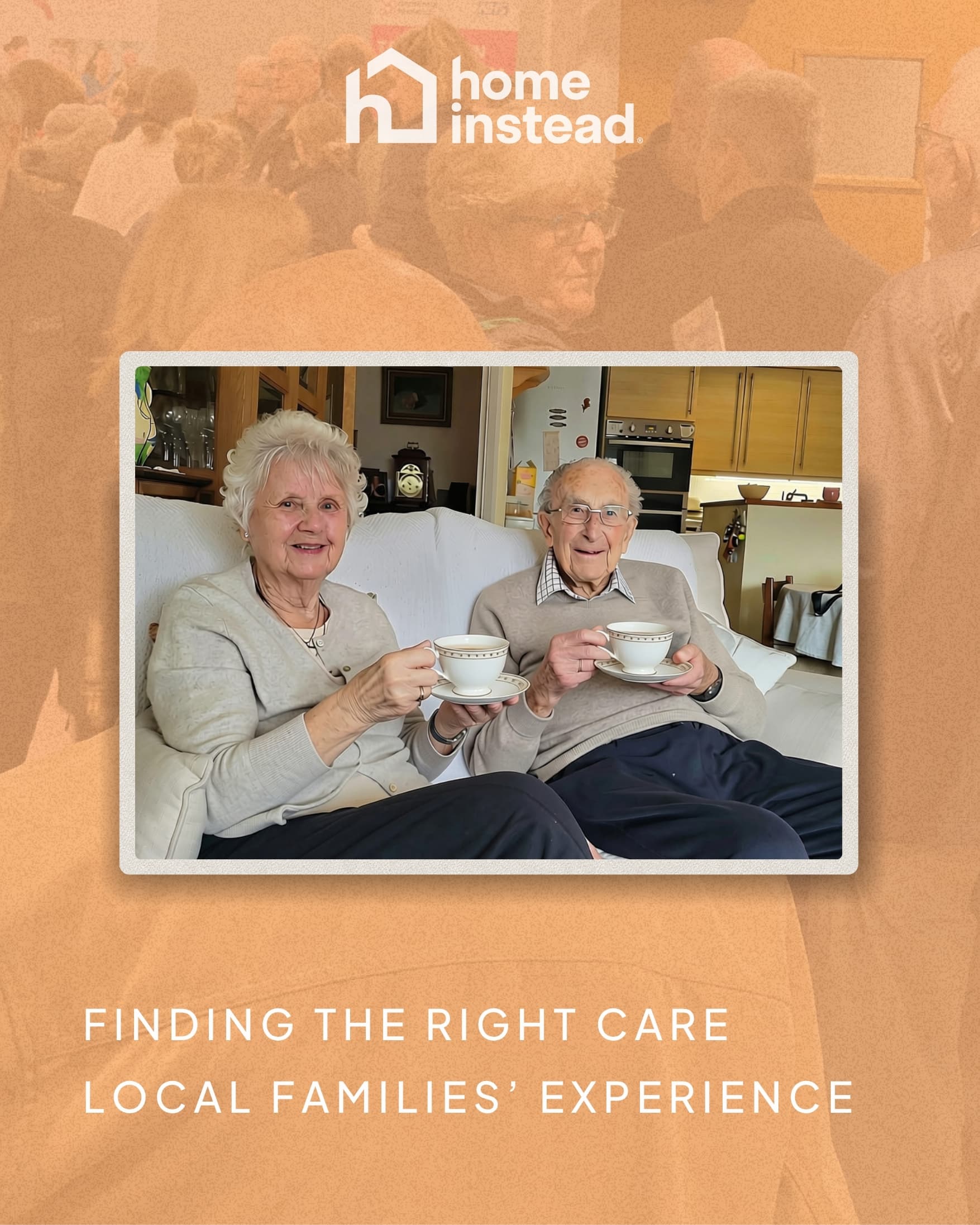
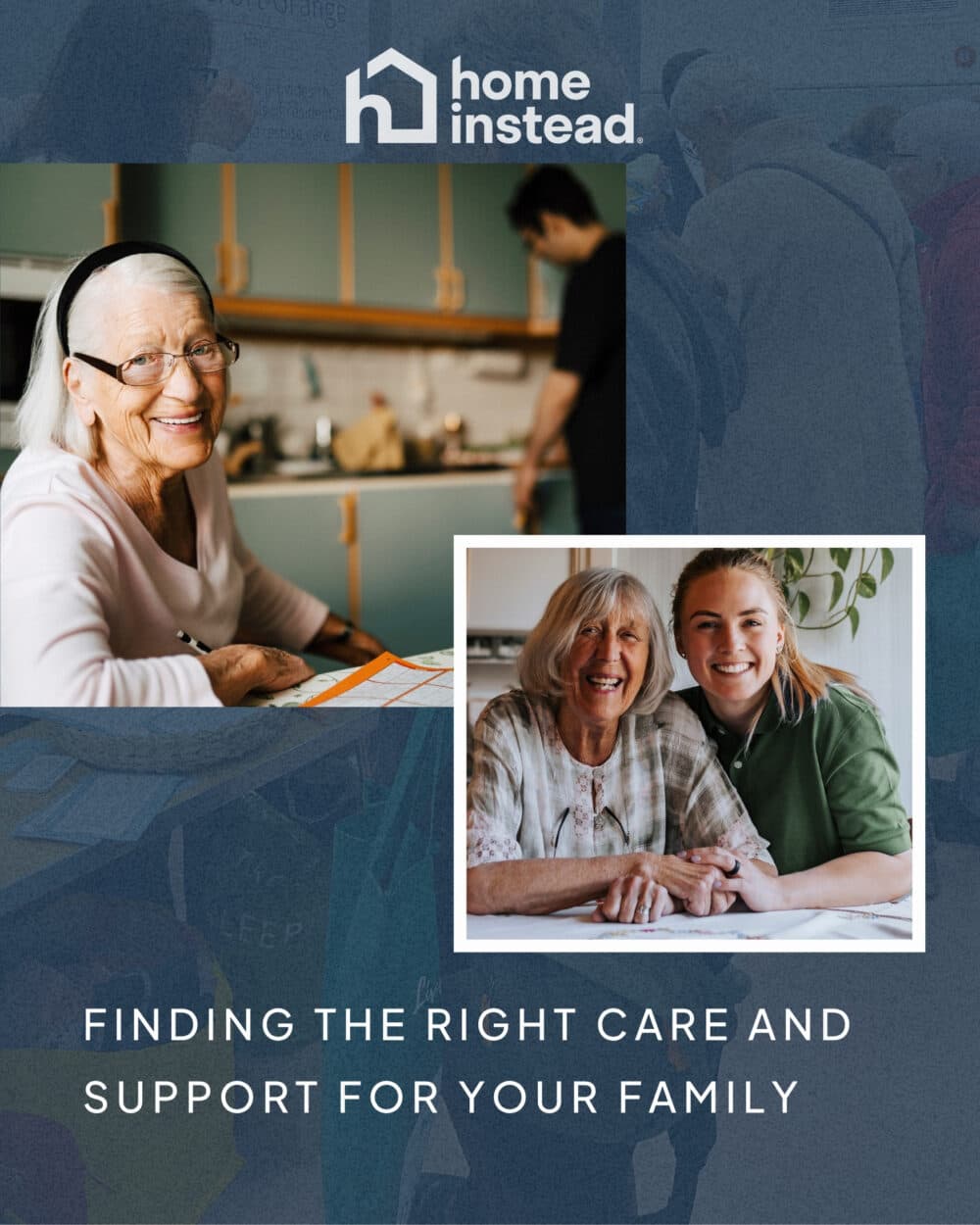
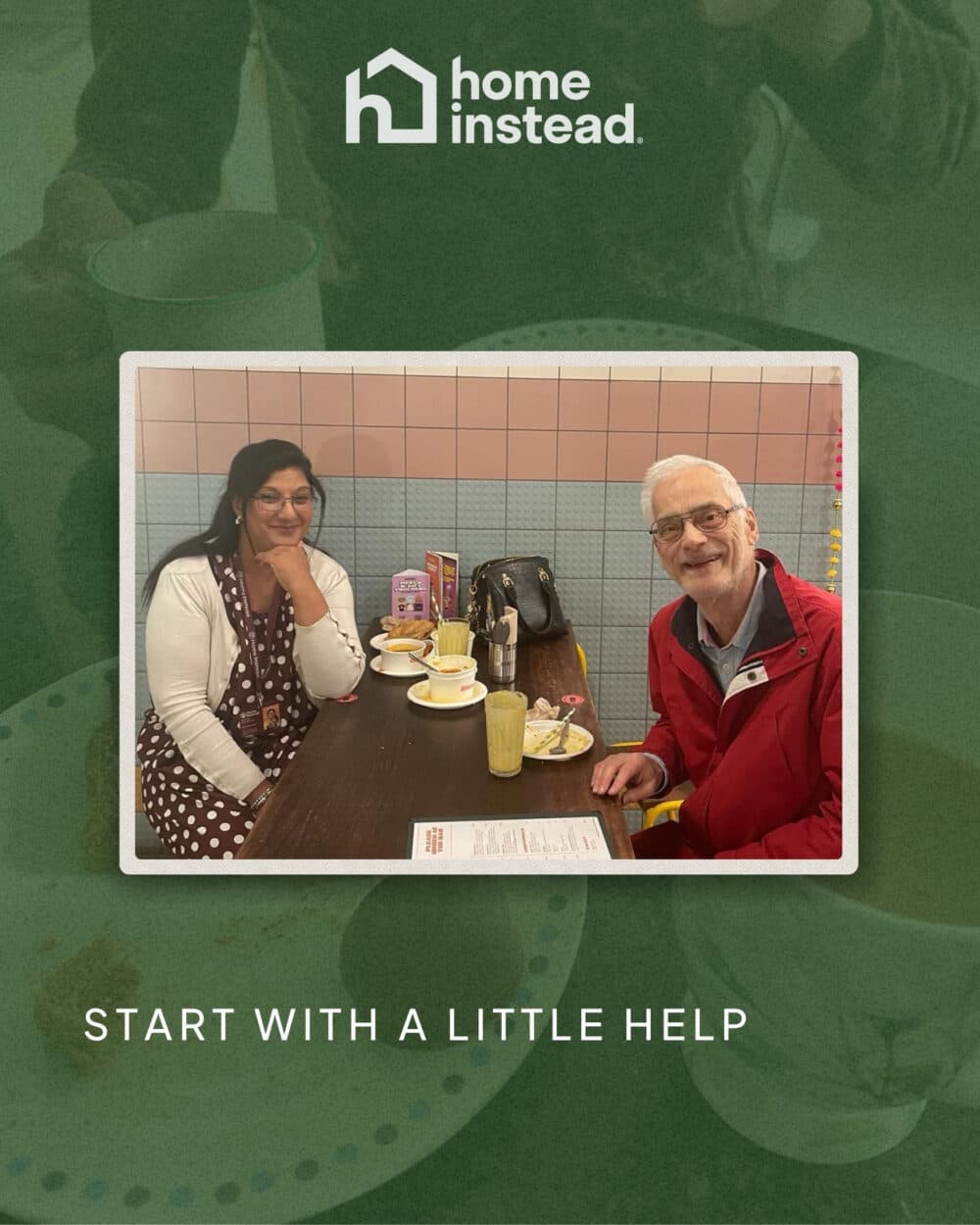
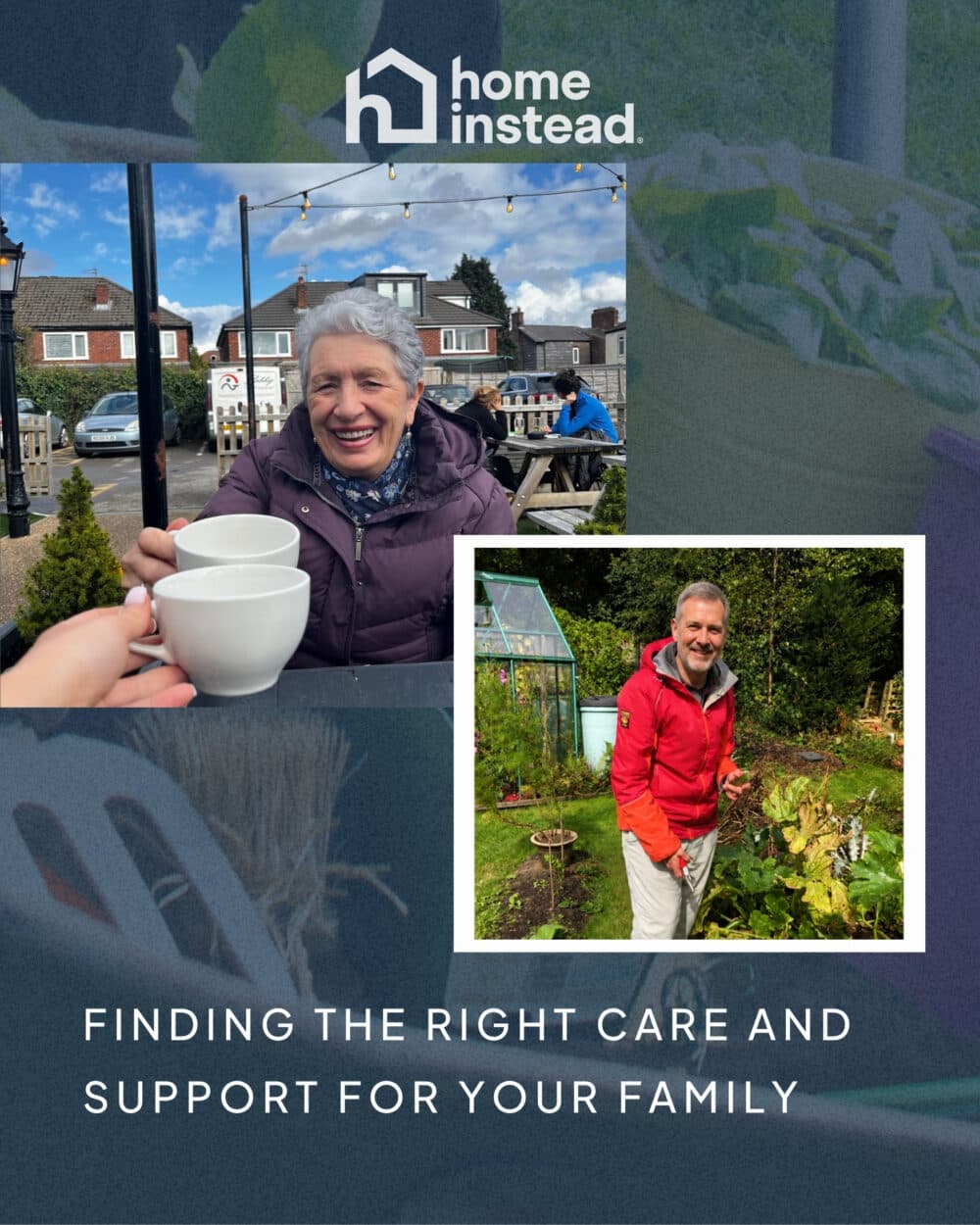
(Some names have been changed to protect our clients’ identities. Our photographs show our clients but do not necessarily depict the people whose stories appear here).
How do we know what care Mum or Dad needs?
You don’t need to have everything worked out before contacting us. Laura and her team start by listening: what is becoming difficult, what matters to your loved one and what would help the family?
For some people, a few visits each week provide enough support. Others need daily help, care following a hospital stay or someone living alongside them.
Your Client Manager, (you could meet Laura, Monika, Karen or Hazel) will get to know you, assess the support needed and help you explore the options. Having a good connection with this person matters: they will help coordinate care, answer questions and review arrangements as circumstances change.

Can we move to live-in care later?
Yes. Care can develop as someone’s needs change, including moving from visiting care to live-in support where appropriate.
Andrew came to us following a stroke. His doctor recommended Home Instead after seeing the support we had provided for his own mother. With Andrew’s family living abroad, having dependable help nearby was particularly important.
Initially, Andrew needed one-hour visits for meal preparation and medication support. As his needs increased, his care developed into live-in support, with Shani moving in as his Live-in Care Professional.
Home-cooked meals, familiar routines and companionship helped him gain confidence. His days included watching films, outings to the Bridgewater Hall and walks by the Bollin.
We are on the journey with you. As Andrew’s dementia has progressed, outings are no longer possible. His support has changed again, with live-in care and additional waking-night care helping him remain in the familiar surroundings that bring him comfort.
What does live-in care look like day to day?
A Care Professional lives in your home, providing agreed support and companionship around your routines, needs and preferences. They have planned breaks, and any overnight support needs are discussed as part of the care arrangements.
For John in Timperley, staying at home meant remaining with his much-loved Westie, Trevor, and continuing to enjoy the places he had visited with his late wife.
As his mobility declined and he began using a wheelchair, everyday tasks became harder. He was missing meals, struggling with medication and finding it difficult to get out. His children lived out of the area and wanted a solution that helped him retain control over his life.
Beryl and Nona became his regular Live-in Care Professionals, sharing his care a week at a time. They got to know his sense of humour, his love of dogs and his favourite destination, Tatton Park.
His son Ben described the difference: “Dad was enjoying more outings, eating freshly cooked meals and had plenty of stories to share when family visited”. Ben even admitted to timing some visits around teatime because Nona’s cooking was so good”!

Can someone stay at home with dementia?
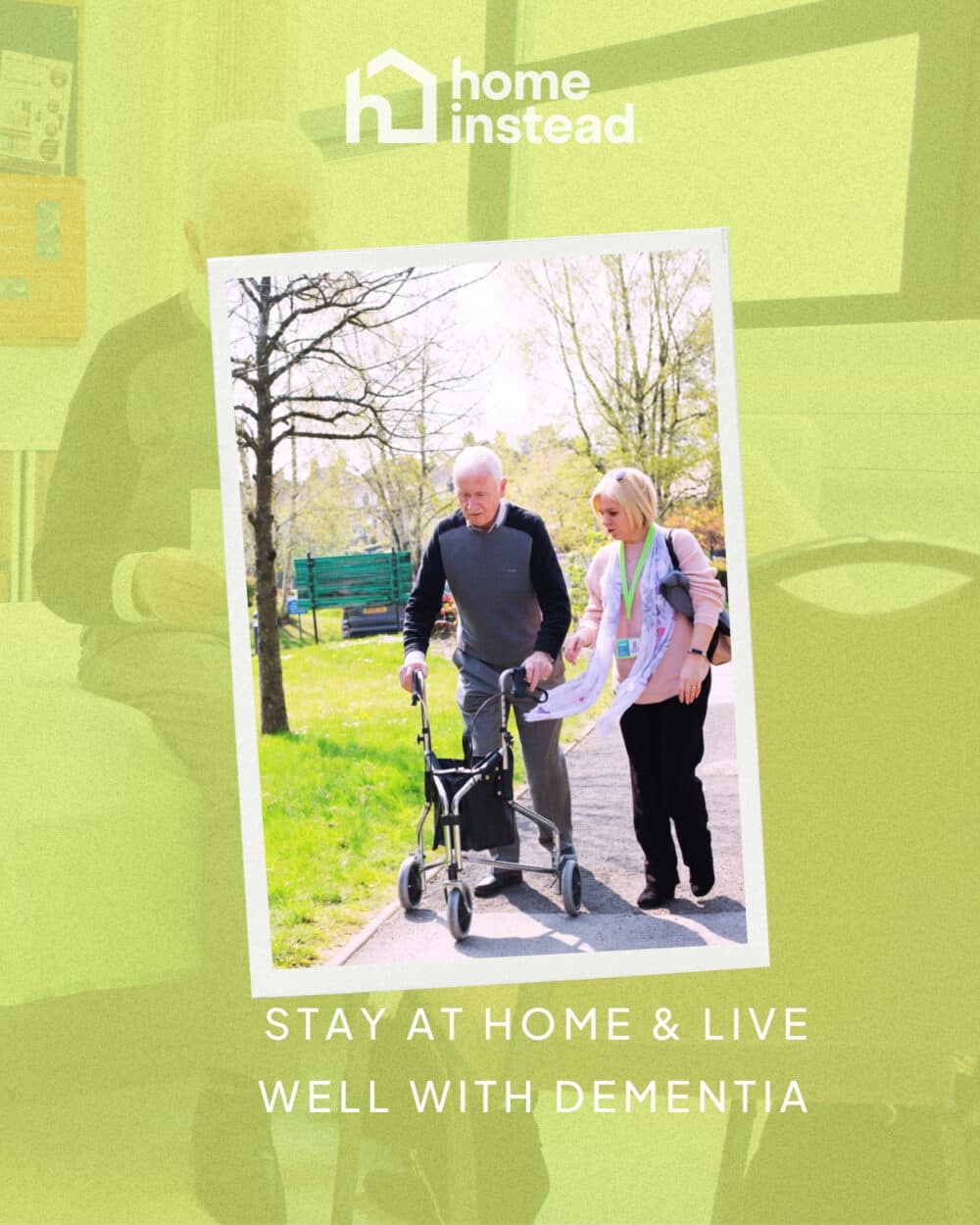
For many people, yes, with support tailored to their needs and reviewed as those needs change.
Janet was diagnosed with Alzheimer’s in 2021. We began visiting a couple of times a week to help with tasks she found challenging and to take her out, while offering reassurance to her daughters in London.
As her needs increased, her visits grew to include medication support, freshly prepared meals and a weekly trip to a dementia-friendly choir in Bowdon (Vibrant Voices).
With her familiar Care Professionals, Janet continued enjoying favourite places, including High Legh Garden Centre and Fletcher Moss Park. She also travelled to London with one of her regular Care Professionals to celebrate her daughter’s 50th birthday.
Janet’s story shows how visiting care can help someone stay connected to the people, places and occasions that matter to them, and when her needs exceed this we can look at live-in care, supported to cover breaks by her hourly care professionals whom she feels comfortable with.
One of the important elements to Dementia care is continuity, and we are proud to be able to support this journey for families.

Will a live-in carer take over our home?
Sharing your home can feel like a big adjustment. We take time to understand how you like things done and help find someone who fits into your household.
One client’s wife told us she knew her husband needed support but worried about losing her role at home. She loved cooking, doing the weekly shop and running the house.
Karen talked the family through live-in care and shared profiles of potential Care Professionals to help them find the right match.
Their carer, John, supported her husband with bathing, dressing, shaving and companionship, to clubs were he needed extra support. They went out for coffee, attended his Sale Probus group and visited the allotment off Grosvenor Rd, while his wife also gained time to see friends in the village and enjoyed their “Golden girl” ! walks around the mersey, this was her time to decompress and put the world to right.
There were adjustments along the way, and if she felt awkward in talking to John directly our office team helped work through these.
For her, the greatest benefit was being able to stay together in their family home.
Is it normal to feel guilty about asking for help?
Families often tell us they feel they should be managing everything themselves. Accepting support can take time, even when the pressures are becoming difficult.
Naomi’s sisters were juggling appointments, missed meals, medication concerns and frequent calls alongside their own lives. An illness in the family eventually prompted them to explore live-in care.
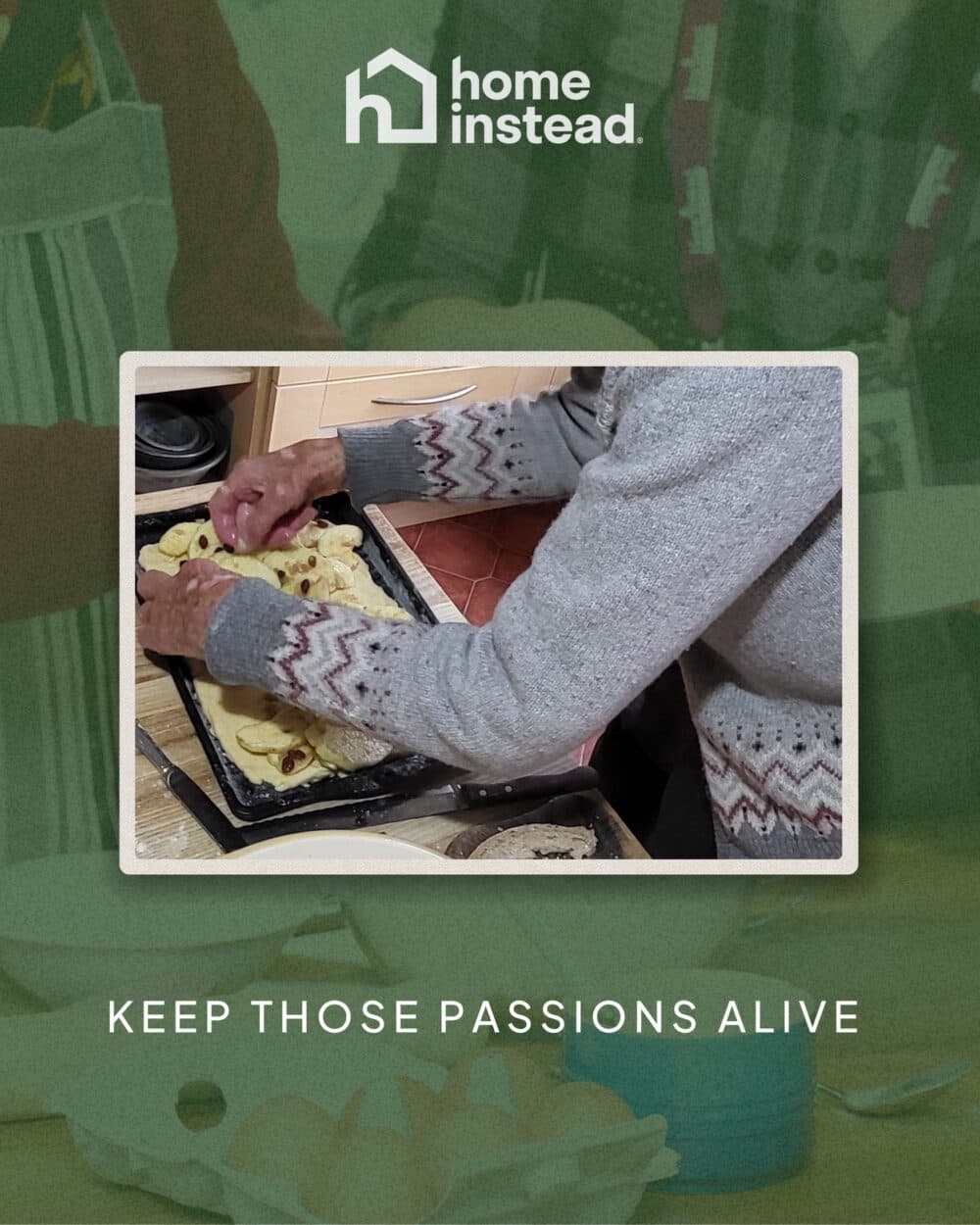
Sophie, Naomi’s main Live-in Care Professional, discovered that baking was a source of enjoyment and confidence for her. Shopping for ingredients and making cakes became activities where Naomi could take the lead.
Alongside support with daily routines and appointments, Sophie helped the family find ways to enjoy time with Naomi without putting pressure on her to remember.
Her sisters described arriving to a warm welcome, a fresh traybake and goodies to take home. Dementia still brought sadness, but having support created more space for enjoying their relationship as sisters.
Can you help Dad come home from hospital?
We can assess the support needed and work with the family and hospital team to establish whether we can help with discharge. Arrangements depend on the person’s needs and the availability of suitable care.
Bernard’s daughter Julia contacted us while her 87-year-old father was recovering at Manchester Royal Infirmary following a ruptured abdominal aneurysm.
Bernard, who also had early-stage dementia, was becoming distressed in hospital and wanted to return home. His wife, Sally, was frail and unable to provide the support he would need.
We responded to Julia that morning. Karen visited the hospital the next day to meet Bernard and his family, and by the following afternoon a team was ready to provide four visits a day when he returned home.
Our Care Professionals supported his personal care and catheter needs, alongside household tasks that also helped Sally.
As Bernard recovered, his visits reduced from four to two a day. A consistent team helped the couple build familiar, trusting relationships and gave Julia, who lives in the Midlands, reassurance about her parents’ care.
What if we live far away or work full time?
You can still be closely involved in your loved one’s care, with a local team providing support when you cannot be there.
Andrew’s family abroad, Janet’s daughters in London and Bernard’s daughter in the Midlands all needed to know that someone nearby understood their loved one’s needs.
Our Client Managers are just around the corner based in Broadheath close to Sale, Altrincham and Wythenshawe we review care with families via email, zoom on the phone and face to face, whatever works for you, coordinating meetings and touch points with GPs, occupational therapists, district nurses and other professionals involved.
Live-in Care Professionals are our eyes and ears, they too notice when something may need attention, trained in-house by our team we run routine checks and pop-ins to make sure all is running smoothly.
Who will support us along the way?
Many families find us through recommendations from friends, neighbours or healthcare professionals. We know how much trust it takes to invite someone into your home.
Alongside your Care Professionals, you have an experienced local office team to talk things through with. Laura, Karen, Hazel and Monika bring 33 years of Home Instead experience between them, helping families navigate changing needs and find practical solutions.
Whether you are exploring care for the first time or wondering whether existing arrangements are still right, we are here to listen.
To talk about care at home or live-in support in Altrincham, Sale or Wythenshawe, call our friendly team on 0161 870 1136.